
Last updated September 25, 2026
Seasonal ADU Care for Chino Hills: Year-Round Homeowner’s Guide
Santa Ana wind events in Chino Hills regularly exceed 60 mph in October and November, dislodging rooftop HVAC caps, cracking stucco at window reveals, and forcing attic ventilation baffles - none of which appear in a standard spring/fall maintenance checklist. We’ve inspected ADUs in Chino Hills where a single November windstorm caused $3,800 in combined roofing and stucco damage that a generic ADU Design & Permitting Maintenance Checklist for Chino Hills Homeowners would have missed entirely. This guide maps the actual maintenance sequence that Chino Hills’ hot dry summers, occasional freezing nights, and high-velocity wind events demand. You’ll learn the specific inspection points, temperature thresholds, and documentation practices that protect your ADU investment year-round.
Quick Answer
Seasonal ADU care in Chino Hills requires a four-part maintenance sequence timed to local climate stressors: summer HVAC and slab inspection (June-September), pre-Santa Ana roof and gutter preparation (October-November), freeze protection for exposed plumbing (December-February), and post-winter stucco assessment plus pre-cooling HVAC service (March-May). Homeowners who document each seasonal round with dated photographs build a maintenance record that accelerates warranty claims and supports resale value.
Table of Contents
- Summer: HVAC, Attic Ventilation, and Concrete Slab Inspection
- Fall: Pre-Santa Ana Roof and Exterior Preparation
- Winter: Freeze Protection for Plumbing and Electrical
- Spring: Stucco Recovery and Pre-Peak Cooling HVAC Service
- The Documentation Practice That Pays at Resale
- ADU Type Differences: Detached, Garage Conversion, and JADU
- Prefab and Modular ADU-Specific Maintenance Notes
- Common Mistakes to Avoid
- When to Call a Professional
- Frequently Asked Questions
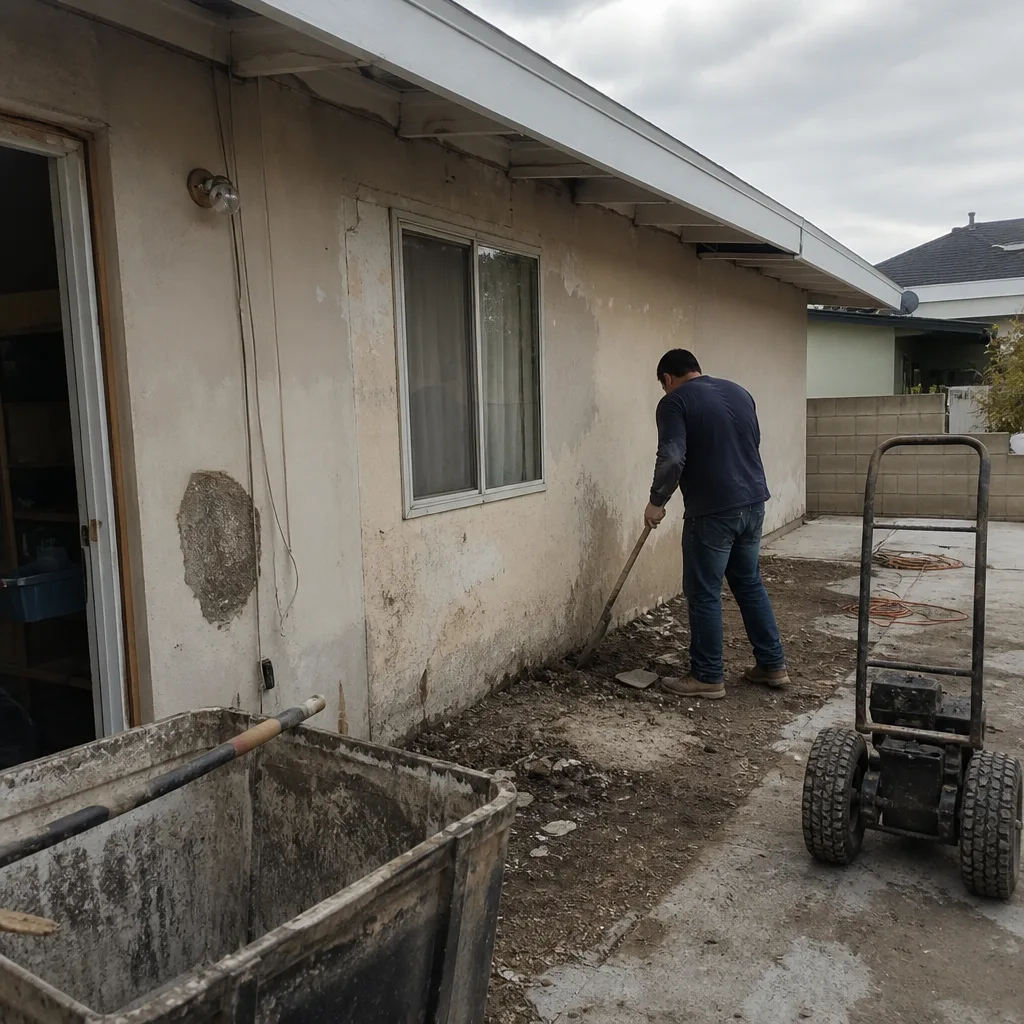 Before
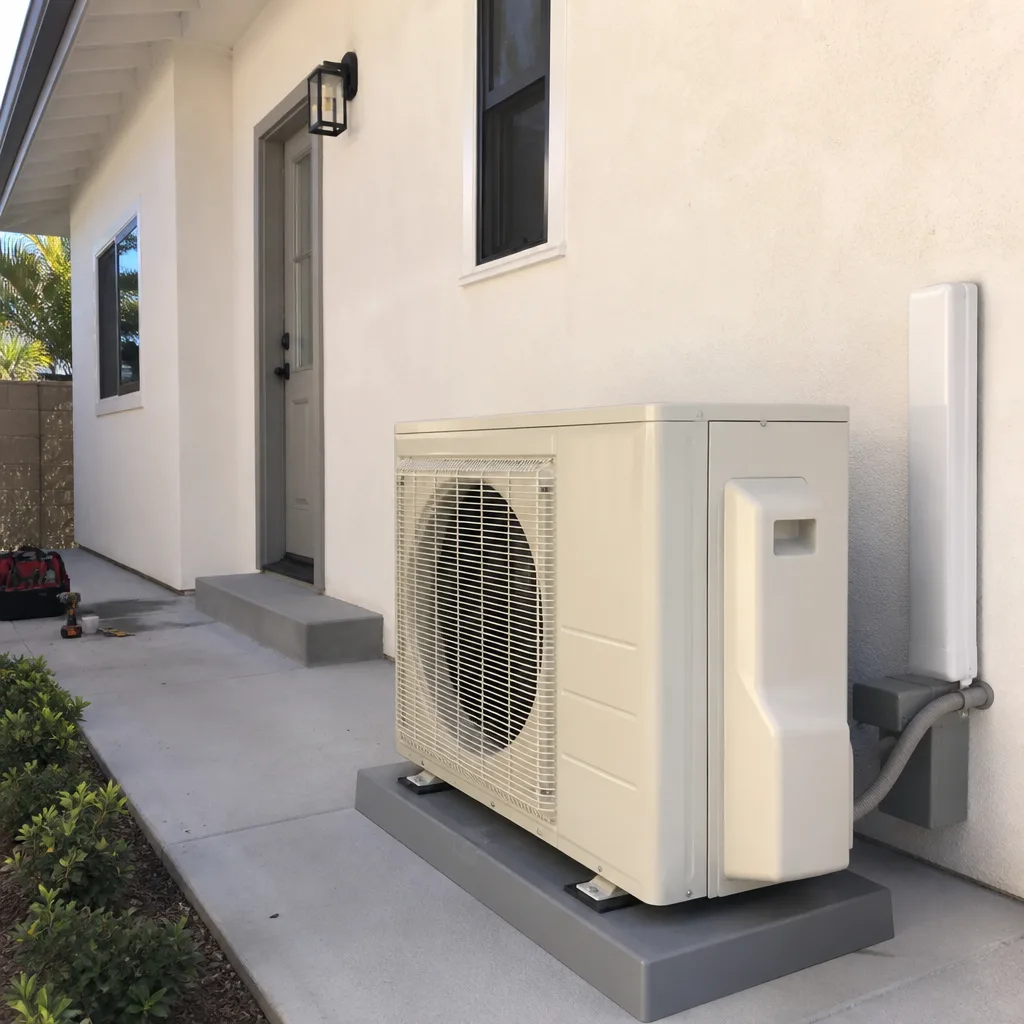 After
AfterSummer: HVAC, Attic Ventilation, and Concrete Slab Inspection
Chino Hills summer temperatures routinely reach 95°F, with attic spaces in poorly ventilated ADUs climbing past 140°F. That heat load degrades HVAC efficiency, accelerates roofing material fatigue, and stresses concrete slab expansion joints. Our field teams measure attic temperatures during July inspections across Chino Hills, from Sleepy Hollow to Vellano, and we’ve established clear thresholds that separate normal operation from warning signs.
HVAC Filter Replacement for Chino Hills Particulate Levels
Standard guidance suggests 90-day filter replacement. In Chino Hills, that’s insufficient. The city’s location at the intersection of the 71 and 91 corridors, combined with Santa Ana wind dust transport and seasonal wildfire particulate, loads filters faster than coastal climates. We specify MERV 11 filters for ADU systems and recommend 45-day inspection during July through September, with replacement at 60 days maximum if the unit runs daily.
Here’s what we check:
- Filter pleat color: uniform grey load indicates normal dust; dark streaking signals duct leakage pulling attic air
- Filter frame deformation: heat warping means the blower is working against excessive restriction
- Condensate drain pan: algae growth in Chino Hills’ hard water requires annual biocide treatment, not just flushing
- Refrigerant line insulation: UV degradation at the exterior penetration point, common after three Chino Hills summers
Refrigerant level checks belong in spring, not mid-summer emergency calls. We’ll return to that timing below.
Attic Temperature Thresholds
We measure attic temperature at mid-day with the HVAC running. The differential between ambient outside temperature and attic temperature tells the story:
- Attic within 25°F of ambient: adequate ventilation, no action needed
- Attic 25-40°F above ambient: marginal ventilation; inspect soffit and ridge vent continuity
- Attic more than 40°F above ambient: ventilation failure; expect shingle premature aging and HVAC compressor overwork
In a 2023 Chino Hills garage conversion ADU we inspected near English Springs Road, the attic measured 152°F against 96°F ambient - a 56°F differential. The ridge vent had been painted over during exterior finishing, and two soffit vents were blocked by insulation baffles installed backward. The homeowner’s July electric bill was $340 for a 480-square-foot ADU. After vent correction, the August bill dropped to $187.
Concrete Slab Expansion Joint Inspection
Chino Hills’ clay-heavy soils and wide summer temperature swings stress slab-on-grade construction. For detached ADUs and garage conversions retaining the original slab, we inspect expansion joints annually in August, when thermal expansion peaks.
What we’re looking for:
- Joint sealant extrusion or complete loss - indicates joint compression beyond design
- Parallel cracking within 18 inches of the joint - suggests inadequate joint depth or spacing
- Slab elevation differential across the joint - signals soil movement, not just thermal stress
Garage conversion ADUs in Chino Hills built before 1985 often lack isolation joints between the original garage slab and any adjacent patio or walkway. Summer thermal cycling propagates cracks into the living space. We document these with dated photographs and include repair scope in the maintenance record. Under our Garage Conversion ADU in Chino Hills service, we specify saw-cut isolation joints where original construction omitted them.
Fall: Pre-Santa Ana Roof and Exterior Preparation
The Santa Ana wind season in Chino Hills concentrates in October and November, with documented gusts exceeding 60 mph at local weather stations. These are dry, compressive winds that test every exterior system differently than winter rain. A maintenance sequence built for Pacific Northwest moisture patterns misses this entirely.
Roof and HVAC Cap Inspection Checklist
We perform this inspection in the first two weeks of October, before the first major wind event. Our checklist for Chino Hills ADUs:
- Ridge cap shingles: Check for brittle edges and uplift - Santa Ana winds enter at the ridge and peel shingles backward. Any lifted edge gets adhesive reinforcement or replacement.
- HVAC roof cap and storm collar: Verify three-point screw retention minimum; check storm collar sealant for alligatoring from UV exposure. We’ve recovered HVAC caps from neighboring properties after November wind events.
- Stucco at window and door reveals: Inspect for hairline cracking at the interface between stucco and vinyl or aluminum trim. Wind-driven dust enters these cracks, then winter moisture expands them. Map crack locations with photographs.
- Attic ventilation baffles: Confirm mechanical attachment at ridge and soffit ends. Wind pressure differentials between windward and leeward roof faces can dislodge poorly secured baffles, creating attic air bypass that defeats insulation.
- Exterior light fixtures and electrical penetrations: Check gasket compression and mounting stability. Fixture oscillation in wind fatigues electrical connections.
For New Detached ADU in Chino Hills projects we design, we specify hurricane-rated roof caps and mechanical baffle attachment as standard. Retrofitting these on existing ADUs is straightforward fall maintenance that prevents mid-winter emergency calls.
Gutter Clearing for Eucalyptus and Oak Debris
Chino Hills lots retain mature eucalyptus and coast live oak from original development landscaping. Both species shed debris on different fall schedules: eucalyptus bark strips continuously from August through November; oak leaves drop concentrated in November through December. Gutters clogged with this combination form a dense, water-retentive mat that accelerates corrosion at seams and overflows into fascia.
We recommend:
- First clearing: mid-October, after initial eucalyptus shedding, before Santa Ana winds compact debris
- Second clearing: early December, after oak leaf drop, before winter rain sequences
- Gutter guard evaluation: micro-mesh performs better than surface-tension designs with eucalyptus oil residue, which beads water on standard gutter covers
In the Oak Tree Downs neighborhood, we’ve documented gutter systems requiring three clearings annually due to mature oak canopy coverage. Homeowners who skip the October clearing face February fascia rot when winter rain hits compacted November debris.
Winter: Freeze Protection for Plumbing and Electrical
Chino Hills winter lows average 42°F, but radiational cooling in clear-sky conditions produces localized 28°F readings, particularly in December and January. The Chino Hills Specific Plan zone and canyon-adjacent properties experience these extremes more frequently than the city center. For ADUs with unconditioned crawlspaces or exterior plumbing runs, this is the damage season.
PEX Supply Line Protection in Unconditioned Crawlspaces
Detached ADUs in Chino Hills often have perimeter foundation with raised floor, creating crawlspaces that track outdoor temperature closely. PEX tubing, while freeze-tolerant to expansion, fails at fittings when ice forms and pressure spikes. We inspect:
- Pipe insulation continuity at fittings and valves - the weak points where insulation gets trimmed and not replaced
- Foundation vent closure status - we recommend removable vent covers installed November 1, removed March 15
- Heat tape operation at hose bib supply lines - test with ammeter draw verification, not just indicator light
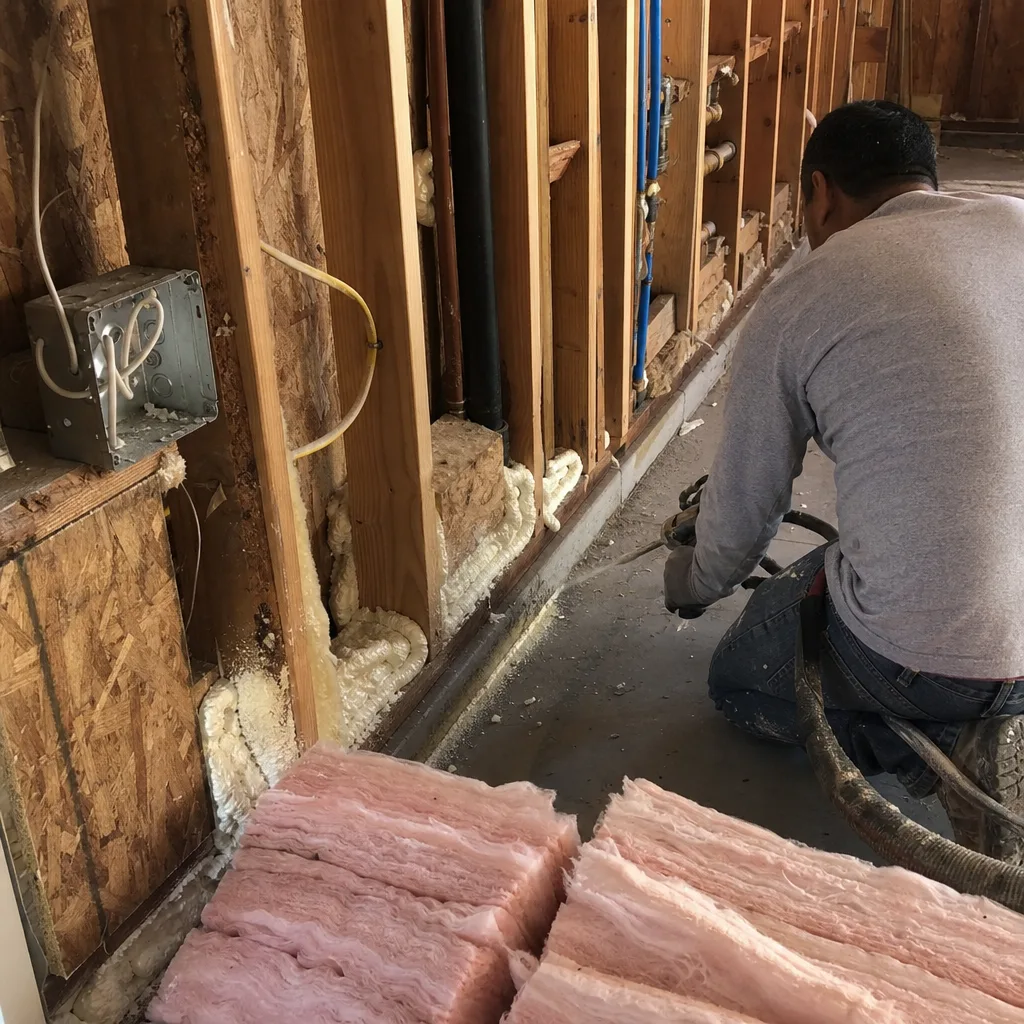
- Air sealing at plumbing wall penetrations - wind infiltration through gaps accelerates pipe chilling
After a January 2023 freeze event, we responded to three Chino Hills ADUs with split PEX at manifold fittings. All had insulation at straight pipe runs, none at the manifold itself. The repair cost averaged $680 per unit, all avoidable with $12 in fitting insulation.
Meter Pedestal and Exterior Electrical
Uninsulated meter pedestals for detached ADUs concentrate cold at the service entry. We’ve measured 8°F lower temperatures inside pedestals than ambient air during radiational cooling nights. This affects:
- GFCI breaker nuisance tripping at cold threshold
- Terminal screw loosening from aluminum conductor contraction cycles
- Conduit seal degradation, allowing moisture entry that freezes and expands
We recommend pedestal inspection during the first December cold snap: check for condensation inside the enclosure, verify terminal torque, and confirm conduit seal integrity. Document with photographs for the maintenance record.
Spring: Stucco Recovery and Pre-Peak Cooling HVAC Service

Winter moisture cycling in Chino Hills - occasional rain on sun-heated stucco, followed by dry periods - creates a specific crack pattern that spring inspection must address before summer thermal loading expands them further.
Stucco Crack Mapping and Repair Classification
We photograph and measure every visible crack during March inspection, then classify:
| Crack Width | Classification | Repair Method | Timeline |
|---|---|---|---|
| Less than 1/16 inch | Hairline, normal thermal | Elastomeric caulk, color-matched | Same-season |
| 1/16 to 1/8 inch | Structural monitoring zone | Epoxy injection or professional repair; photograph quarterly | Within 30 days |
| Greater than 1/8 inch | Structural evaluation required | Professional assessment for substrate movement or lath failure | Immediate |
Crack orientation matters. Horizontal cracks at window heads in Chino Hills often indicate Santa Ana wind loading on inadequately fastened lath. Diagonal cracks at corners signal foundation movement, common in the rolling terrain of northern Chino Hills. Vertical cracks at control joints are typically benign.
We map crack locations on a wall elevation sketch, date the map, and photograph each crack with a measurement scale. This documentation becomes evidence if crack progression suggests warranty or insurance claim.
HVAC Refrigerant Level and Pre-Peak Service
Spring HVAC service in Chino Hills must complete before May 15, when first sustained 90°F days begin compressor overload calls. Our pre-cooling check:
- Refrigerant charge verification by weight, not pressure alone - Chino Hills’ 1,200-foot average elevation affects pressure-temperature charts
- Condenser coil cleaning after winter dust accumulation and spring pollen
- Capacitor testing under load - weak capacitors fail on first 100°F day, always
- Duct leakage verification at accessible joints, particularly in garage conversion ADUs where original garage duct routing may have unsealed penetrations
For ADU Design & Permitting in Chino Hills projects we specify, we design duct systems with accessible inspection points that make this spring service straightforward. Retrofit ADUs often require creative access solutions.
The Documentation Practice That Pays at Resale
Every seasonal inspection we perform includes dated, geotagged photographs delivered to the homeowner within 48 hours. This is not a courtesy - it’s a financial instrument. For ADU Cost Breakdown: The Chino Hills Homeowner’s Reference for 2026 context on how documentation protects resale value, here’s why it matters in Chino Hills specifically.
The Chino Hills real estate market for ADU-equipped properties increasingly involves buyer scrutiny of unpermitted work, warranty transferability, and maintenance history. A documented photo record:
- Proves permit-compliant construction at resale, when buyer inspectors question ADU legality
- Supports warranty claims by establishing pre-existing condition timelines - critical for our 365-Day Done Right Promise and manufacturer warranties on systems like James Hardie siding or Abodu prefab components
- Demonstrates proactive maintenance to insurers, particularly relevant after California’s wildfire risk reassessments
- Provides evidence in neighbor dispute or HOA proceedings, not uncommon in Chino Hills’ planned communities with ADU restrictions
We structure the record as a chronological folder with subfolders by season and system. Each photograph includes a text note: location, measurement, observation, recommended action, and action completion date. Homeowners who maintain this practice independently should adopt the same structure.
Under The Haven Standard, our documented photo record on every visit is Clause 3 - promised in writing, delivered with evidence. When we say “the existing slab is 4 inches, within range for a conversion,” the photograph with tape measure visible accompanies the statement.
ADU Type Differences: Detached, Garage Conversion, and JADU
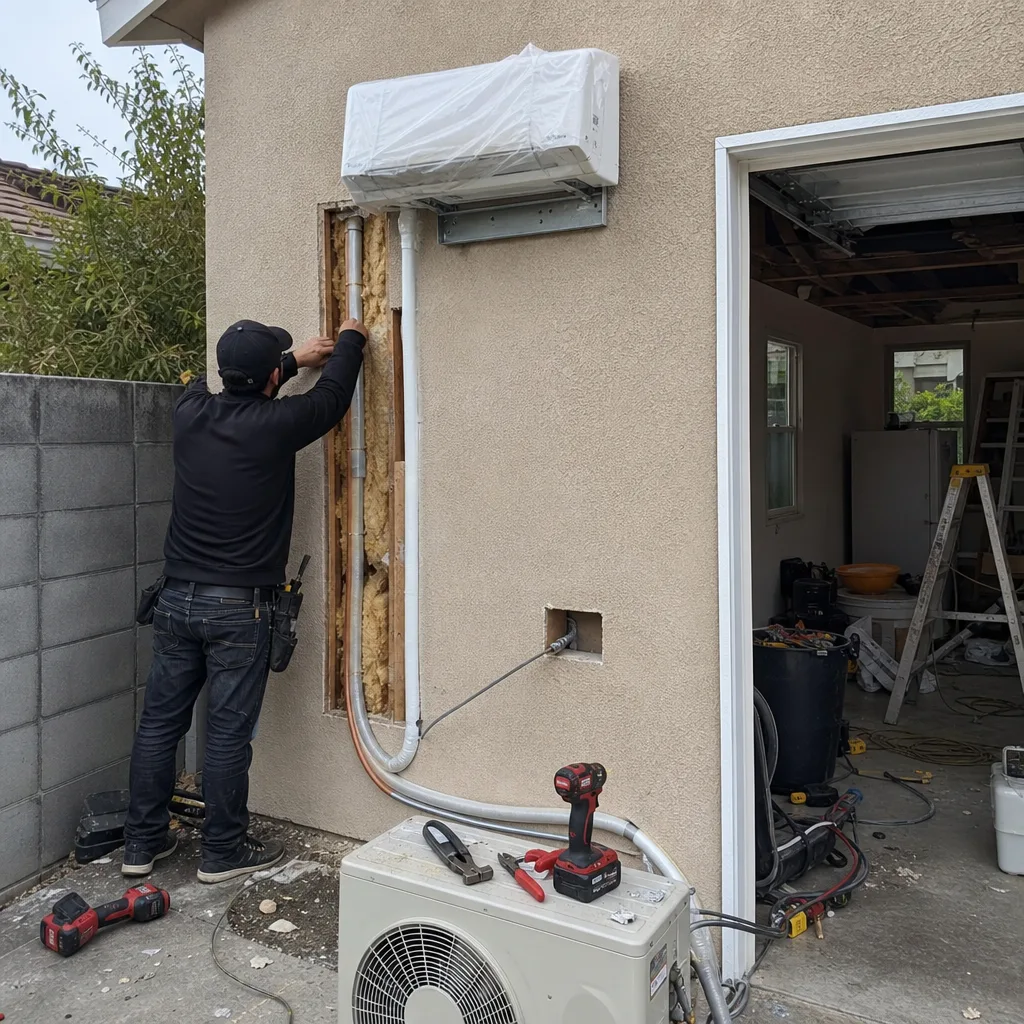
Maintenance priorities shift by ADU type, and Chino Hills’ ADU stock skews heavily toward garage conversions due to the city’s 1980s-1990s development pattern of three-car garages on generous lots.
Garage Conversion ADUs
The retained garage slab, often 3.5 inches thick versus 4-inch minimum for new construction, requires closer expansion joint monitoring. Original garage door openings converted to living space need seasonal seal inspection - the header detail is a common air and moisture infiltration point. HVAC duct routing through the original garage attic space typically has less clearance for insulation than new construction, making summer attic temperature monitoring more critical.
New Detached ADUs
Standalone structures face full exposure on all surfaces. Roof cap and ventilation baffle inspection is more critical than for attached structures. Foundation perimeter drainage requires annual verification, particularly on Chino Hills’ sloped lots where surface runoff concentrates. For New Detached ADU in Chino Hills projects we build, we specify perimeter drain inspection ports that make this verification simple.
Junior ADUs and Interior Conversions
JADUs within the primary residence share HVAC and plumbing systems, so seasonal maintenance integrates with whole-house service. The critical distinction: JADU electrical subpanels and egress windows require independent verification, as they’re often added late in construction with less documentation than primary systems.
Prefab and Modular ADU-Specific Maintenance Notes
Chino Hills homeowners increasingly specify prefab and modular systems - Abodu, Cover, Dvele, and others - for faster timeline and factory quality control. These systems have maintenance profiles that differ from site-built construction.
Abodu units ship with factory-sealed building envelopes that reduce stucco crack risk but require seal inspection at module connection joints. The manufacturer’s 10-year structural warranty requires annual documented inspection - our photo record satisfies this.
Cover units with integrated smart home systems need firmware update verification during spring service, alongside standard HVAC maintenance. Network-connected environmental controls can mask HVAC performance degradation until failure.
Dvele units with high-performance envelopes and mechanical ventilation systems require filter replacement at manufacturer-specified intervals, typically more frequent than standard residential guidance due to continuous ventilation operation.
Across all prefab brands, the factory warranty and our 365-Day Done Right Promise operate in parallel - but both require documentation. We coordinate warranty registration and maintenance scheduling as part of our single-contract service, so the homeowner isn’t navigating manufacturer requirements separately from builder obligations.
Common Mistakes to Avoid
- Treating Chino Hills like coastal California. Maintenance schedules written for Santa Monica or San Diego miss Santa Ana wind preparation entirely and underestimate summer particulate loading. The inland heat and wind profile demands its own sequence.
- Skipping the October gutter clearing. Waiting until “fall” means mid-November, after oak drop and wind compaction have created a solid debris mat. The second clearing in December handles leaves; the October clearing prevents mat formation.
- Ignoring attic temperature until the HVAC fails. By the time compressor damage triggers a service call, the attic has been overheating for two seasons. The 25°F/40°F threshold system catches ventilation failure before mechanical consequences.
- Using standard caulk on stucco cracks wider than 1/16 inch. Elastomeric caulk in wide cracks fails by the following spring. The measurement-and-classify system prevents repeated repair and progressive water damage.
- Neglecting prefab module joint inspection. Factory-sealed envelopes give false confidence; the connection joints between modules are site-finished and site-maintained. Annual seal verification is manufacturer-required for warranty.
- Failing to document. Verbal maintenance history evaporates at resale. Photographs with dates and measurements create transferable value. We’ve seen $15,000 resale deductions for ADUs with “unknown” maintenance history versus documented units.
- DIY refrigerant handling. EPA Section 608 certification is required for refrigerant recovery and charging. “Topping off” a system without leak detection violates federal regulation and masks the underlying problem. This belongs to qualified HVAC technicians.
When to Call a Professional
Call a licensed professional when you encounter stucco cracks exceeding 1/8 inch, attic temperature differentials above 40°F, any refrigerant work, electrical panel moisture or corrosion, or slab elevation changes suggesting foundation movement. These indicators point to conditions beyond homeowner maintenance scope and, in some cases, require permit-triggered repair.
Ellery ADU Studio Chino Hills offers free estimates for ADU maintenance assessment, repair scope, and documentation system setup. We’re a design-build studio, not a contractor - our single contract covers assessment through any needed repair, with a written price before work starts under Haven Standard Clause 1. Explore more guides & resources on ADU ownership. Call (951) 456-4467 to schedule your free estimate.
Frequently Asked Questions
Professional seasonal inspection and service for a Chino Hills ADU typically runs $280-$520 per visit, depending on ADU size, accessibility, and system complexity. A full four-season annual program with documentation averages $1,100-$1,800. Ellery ADU Studio provides written line-item quotes before any work begins - no estimate ranges that shift after inspection. Call (951) 456-4467 for an exact quote; estimates are free.
No. Under Haven Standard Clause 1, the written price at signing is the price at completion. If inspection reveals conditions beyond the quoted scope, we document with photographs, provide a supplemental written quote, and obtain written approval before additional work proceeds. No door-side upsells, no scope creep.
A thorough seasonal inspection for a typical Chino Hills ADU requires 2.5 to 4 hours on site, plus 48 hours for photograph processing and report delivery. Garage conversion ADUs with integrated primary-residence systems may require additional coordination time. We schedule with confirmed arrival windows, not all-day waits.
Maintenance items - filter replacement, gutter clearing, sealant application - do not require permits. Repairs affecting structural, electrical, or plumbing systems may trigger permit requirements under Chino Hills Municipal Code. We pull all required permits and schedule inspections as part of our single-contract service; permit costs are itemized in the written quote.
Chino Hills experiences higher Santa Ana wind velocities than Pomona or Ontario due to canyon channeling, lower summer humidity than Corona or Riverside, and more pronounced radiational cooling than the San Gabriel Valley floor. These factors combine to create faster stucco cycling, more critical attic ventilation requirements, and more frequent freeze events than maintenance guides written for the broader Inland Empire account for.
Retain dated photographs of each seasonal inspection, all written quotes and invoices, manufacturer warranty documents with registration confirmation, and permit records for any repairs. Organize chronologically by system. At resale, these records demonstrate permit compliance, warranty transferability, and proactive care that supports full market value. Ellery ADU Studio clients receive this documentation automatically as part of our service.
The Bottom Line
Chino Hills ADU maintenance is not a generic California checklist with a city name swapped in. The Santa Ana wind season, summer particulate loading, and radiational freeze potential create a specific sequence: HVAC and slab in summer, roof and gutter before October winds, plumbing and electrical freeze protection in winter, stucco and pre-cooling HVAC in spring. Document every round with dated photographs. The maintenance record you build protects warranty coverage, supports insurance claims, and returns value at resale. For assessment, documentation setup, or repair scope with a written price before work starts, Ellery ADU Studio Chino Hills serves the city with the same single-contract, documented approach we apply to new ADU design and construction.
Written by Nadia Ellery, Owner at Ellery ADU Studio Chino Hills, serving Chino Hills since 2015.