
Last updated September 25, 2026
DIY vs Professional ADU: The Chino Hills Homeowner’s Decision Guide
California’s owner-builder exemption allows a homeowner to act as their own general contractor - but it also requires signing a disclosure stating the home cannot be sold within one year of the certificate of occupancy without disclosing owner-builder status to the buyer. That single clause reshapes the investment math for Chino Hills homeowners, many of whom bought between 2015 and 2025 at peak prices and now view an ADU as a liquid asset they may need to leverage. In this guide, we’ll walk through exactly what California law permits you to do yourself, what it flatly prohibits, and where the hidden costs of DIY - insurance gaps, engineer stamps, and resale financing barriers - erase the savings you thought you were keeping. For related planning resources, see our ADU Cost Breakdown: The Chino Hills Homeowner’s Reference for 2026.
Quick Answer
Most Chino Hills homeowners cannot legally DIY the core of an ADU project. California Business and Professions Code Section 7044 lets you act as your own general contractor, but electrical, plumbing, and HVAC must still be performed by licensed subcontractors. San Bernardino County’s fire overlay and Title 24 energy compliance require licensed engineer wet stamps that owner-builders cannot produce. The owner-builder exemption also triggers a one-year resale disclosure requirement that complicates buyer financing. The narrow zone where DIY genuinely saves money: interior finish work after final rough inspection, landscaping, and painting - typically $8,000-$18,000 in labor value, not the six-figure savings many assume.
Table of Contents
- What the California Owner-Builder Exemption Actually Covers
- The Trades You Cannot DIY: Electrical, Plumbing, and HVAC
- Chino Hills-Specific Barriers: Fire Overlay and Title 24 Compliance
- Insurance Gaps During Construction: What Your Policy Actually Covers
- Resale Disclosure and Financing Impact: The One-Year Rule
- Where DIY Actually Saves Money (and Where It Doesn’t)
- Cost Comparison: DIY vs. Professional Design-Build in Chino Hills
- Common Mistakes to Avoid
- When to Call a Professional
- Frequently Asked Questions
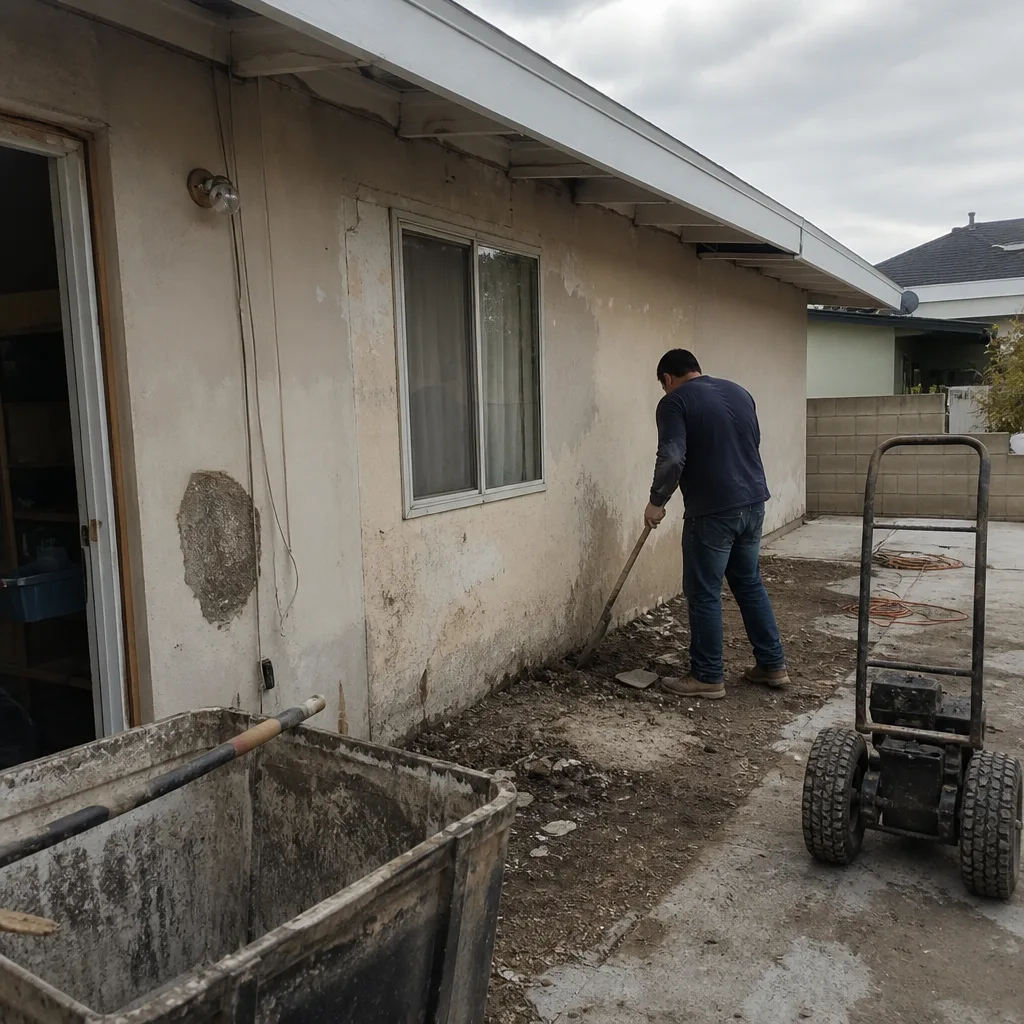 Before
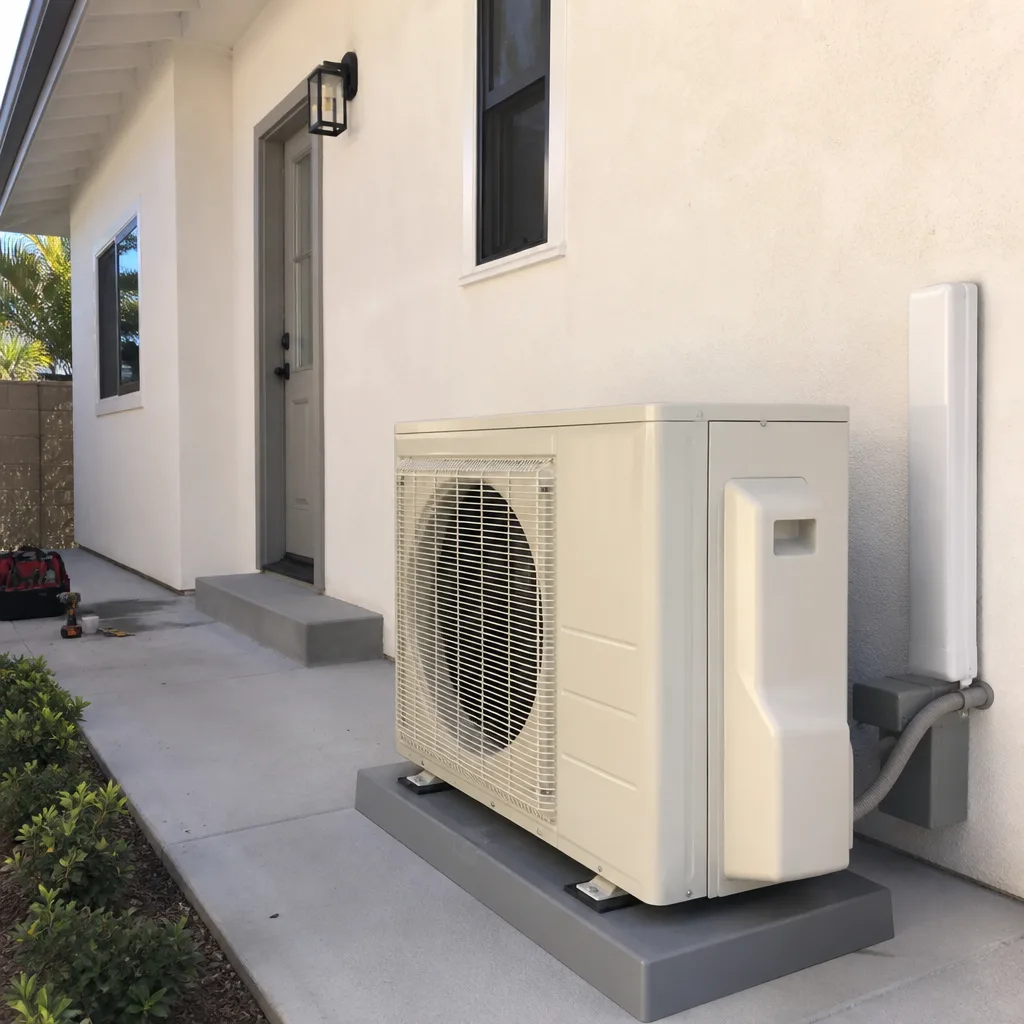 After
AfterWhat the California Owner-Builder Exemption Actually Covers
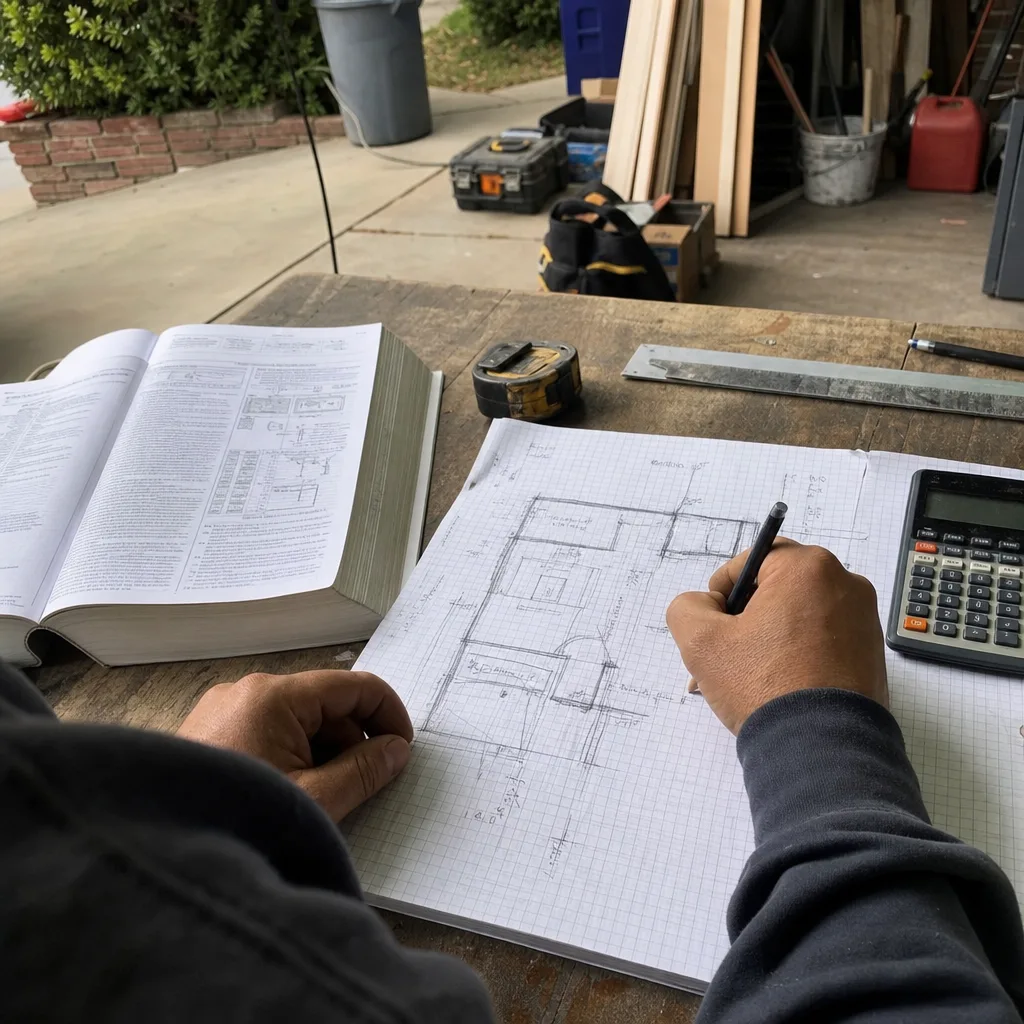
California Business and Professions Code Section 7044 creates the owner-builder exemption. It states that an owner of property may act as their own general contractor and build or improve a structure for their own occupancy - provided they perform the work themselves or with employees who receive wages as their sole compensation. The exemption applies to residential structures, which includes ADUs on owner-occupied properties.
Here’s what this actually means in practice for a Chino Hills homeowner:
- You may pull the building permit in your own name. The city of Chino Hills will issue the permit to you rather than to a licensed contractor. You become the “contractor of record.”
- You may perform general construction tasks yourself. Framing, concrete work, roofing, siding, drywall, painting, flooring, and finish carpentry are all permissible under your direct labor.
- You may hire unlicensed day laborers for non-structural, non-licensed trade work. However, you become their employer for workers’ compensation purposes - a point we’ll return to.
- You must still use licensed subcontractors for electrical, plumbing, mechanical (HVAC), and fire protection systems. These trades are excluded from the owner-builder exemption under separate provisions of the Business and Professions Code.
The exemption carries a critical disclosure requirement. When you pull an owner-builder permit, you sign a document acknowledging that if you sell the property within one year of the certificate of occupancy, you must disclose your owner-builder status to the buyer. This disclosure must be made in writing and becomes part of the transaction record. The California Contractors State License Board maintains this disclosure on file and can enforce penalties for non-compliance.
We’ve reviewed hundreds of ADU projects in Chino Hills since 2015. The owner-builder path attracts two distinct profiles: the genuinely skilled tradesperson who has built before, and the cost-conscious homeowner who underestimates the regulatory burden. The first group sometimes succeeds. The second group almost always calls us mid-project, often after discovering that their permit set was rejected or that their homeowner’s policy has lapsed.
The Trades You Cannot DIY: Electrical, Plumbing, and HVAC
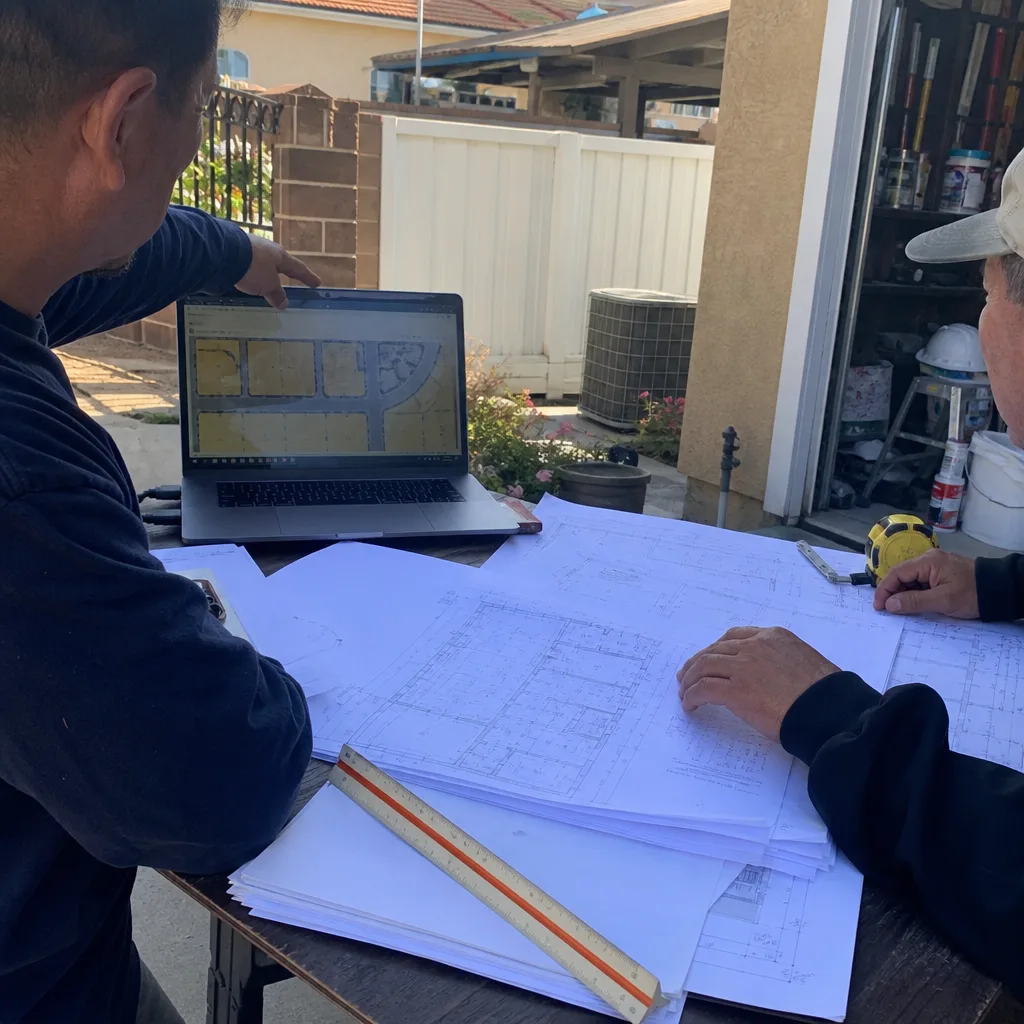
California law draws a bright line around licensed trades. Regardless of your owner-builder status, the following work must be performed by contractors holding the appropriate California specialty license:
- Electrical (C-10): All wiring, panel upgrades, subpanel installation, conduit runs, and final connections. This includes low-voltage systems if they share pathways with line-voltage wiring.
- Plumbing (C-36): Water service lines, sewer connections, gas lines, fixture installation, and backflow prevention. In Chino Hills, this also includes connection to the Chino Hills Water District or Golden State Water Company mains, which require licensed plumber sign-off.
- HVAC (C-20): Heating, ventilation, and air conditioning systems, including ductwork, mini-split installations, and ventilation compliance with Title 24.
- Fire Protection (C-16): Sprinkler systems, where required by San Bernardino County fire overlay provisions.
These are not suggestions. They are statutory requirements with enforcement teeth. If a Chino Hills building inspector discovers unlicensed electrical or plumbing work, the inspection fails immediately. The work must be removed and redone by a licensed contractor. We’ve seen owner-builders lose six to eight weeks on this point alone - the time required to find an available licensed contractor willing to take over mid-stream, plus the re-inspection queue.
The cost implication is straightforward. On a typical 500-square-foot garage conversion ADU in Chino Hills, licensed trade subcontractor costs run:
- Electrical: $8,500-$14,000 (panel upgrade, subpanel, full rewiring, outlets, lighting, EV-ready outlet if required)
- Plumbing: $6,000-$11,000 (trenching to sewer, water service, gas line, fixtures)
- HVAC: $5,500-$9,500 (mini-split system, ducting if needed, Title 24 ventilation compliance)
These are not optional line items you can skip. They are the core infrastructure of a habitable dwelling. The owner-builder who budgets $40,000 for a garage conversion and discovers $20,000-$35,000 in mandatory licensed trade costs has not saved money - they’ve merely delayed understanding where the money goes.
Chino Hills-Specific Barriers: Fire Overlay and Title 24 Compliance
Chino Hills sits within San Bernardino County’s jurisdiction but maintains its own municipal code with county overlay requirements. Two provisions in particular block the owner-builder who assumes technical competence is sufficient.
Fire Overlay and Wildland-Urban Interface Requirements
Much of Chino Hills falls within a Very High Fire Hazard Severity Zone, designated by the California Department of Forestry and Fire Protection (CAL FIRE). The San Bernardino County Fire Department enforces Chapter 7A of the California Building Code in these zones, which mandates:
- Ignition-resistant construction for exterior walls and eaves
- Class A roof assembly ratings
- Ventilation openings with 1/8-inch mesh or approved ember-resistant design
- Specific setback and access requirements for fire apparatus
Compliance documentation requires a licensed architect or engineer to certify that the design meets these standards. The owner-builder cannot self-certify. The wet stamp - the physical embossed seal of a licensed professional - must appear on the permit drawings. This is not bureaucratic theater. After the 2003 and 2008 fire seasons, San Bernardino County tightened enforcement, and Chino Hills building officials now reject permit sets lacking proper fire-overlay documentation.
Title 24 Energy Compliance and HERS Verification
Every ADU in California must comply with Title 24, Part 6 of the California Code of Regulations - the energy efficiency standards. Compliance is demonstrated through one of two paths: prescriptive (following a checklist of mandatory and prescriptive requirements) or performance (energy modeling that shows the proposed building meets or exceeds the energy budget of a reference building).
Either path requires a certified energy analyst to prepare the compliance documentation. The performance path, which most Chino Hills ADUs use for design flexibility, requires software modeling by a Certified Energy Analyst (CEA) or HERS Rater. The documentation includes:
- CF-1R form: Certificate of Compliance, prepared by the energy analyst
- MF-1R form: Certificate of Installation, verified by a HERS Rater after construction
- HERS field verification: On-site testing of insulation, air sealing, and mechanical system performance
The HERS Rater is a third-party verifier, not an employee of the builder. The owner-builder cannot perform HERS verification on their own project. The cost of Title 24 compliance documentation and HERS verification for a Chino Hills ADU typically runs $2,800-$5,200, depending on project complexity and the number of required field verifications. Ongoing maintenance after completion is covered in our Seasonal ADU Care for Chino Hills: Year-Round Homeowner’s Guide.
We’ve specified prefab and modular systems from Mighty Buildings and Plant Prefab for Chino Hills clients whose sites present fire-overlay complexity. These systems arrive with pre-engineered Title 24 compliance packages and fire-resistant assemblies, but they still require local permit adaptation and HERS field verification. The owner-builder who orders a Boxabl unit online and assumes it will sail through Chino Hills permitting without professional adaptation is typically disappointed.
Insurance Gaps During Construction: What Your Policy Actually Covers
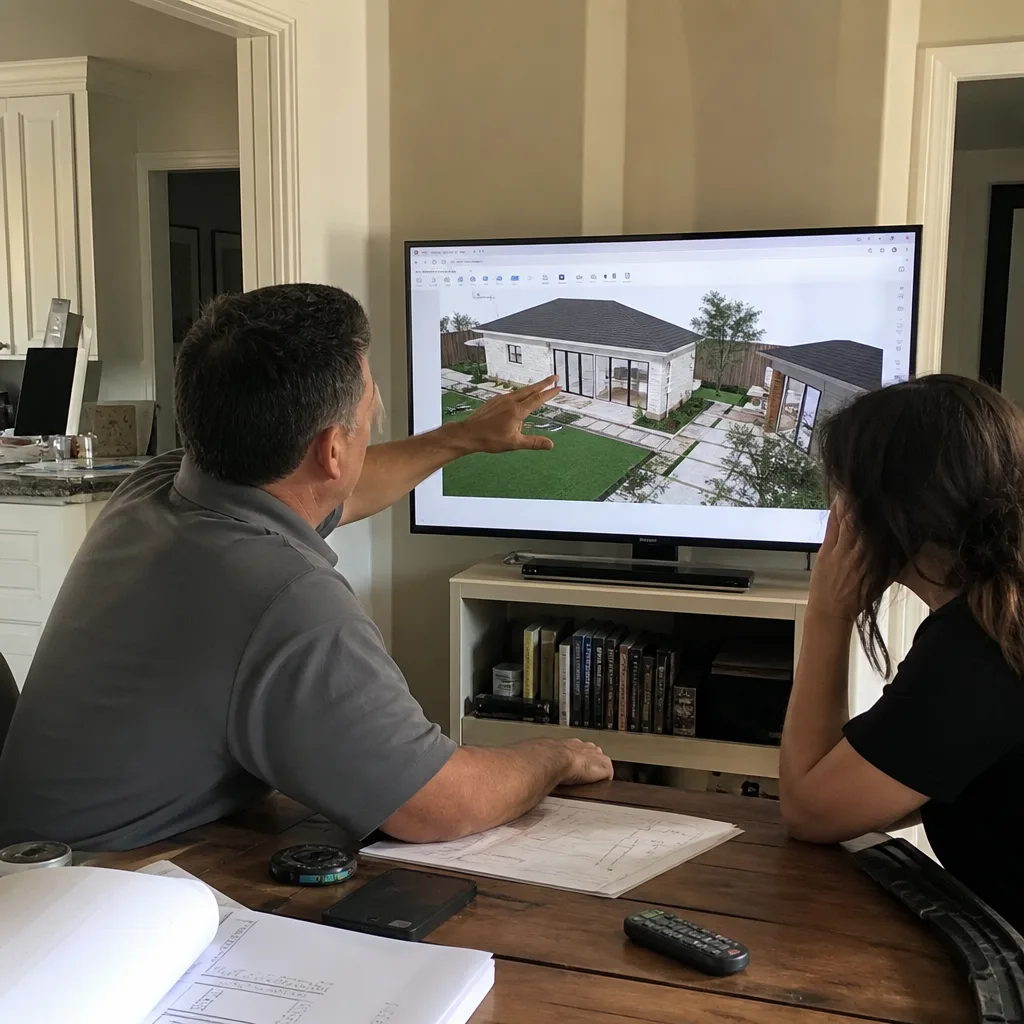
Standard homeowner’s insurance policies contain a standard exclusion for construction or renovation work performed by the insured. When you act as an owner-builder, you are not a “homeowner hiring a contractor” in the eyes of your insurer. You are a party performing construction work, and your policy likely excludes liability and property damage arising from that work.
The specific gap works like this:
- Liability coverage: If an unlicensed day laborer you hired falls from a roof or is injured trenching, your homeowner’s liability coverage may deny the claim. You become the de facto employer, and workers’ compensation - which you probably do not carry - becomes your responsibility.
- Property coverage: If fire, theft, or weather damage occurs during construction, your insurer may classify the property as a “construction site” rather than a “residence,” triggering reduced or excluded coverage.
- Completed operations: If a defect in your DIY work causes damage after occupancy - a plumbing leak you installed, an electrical fire from your wiring - your insurer may deny the claim based on faulty workmanship exclusion.
To maintain coverage during an owner-builder project, you typically need:
- A builder’s risk policy or course of construction endorsement, adding $1,200-$3,500 to project costs
- Workers’ compensation insurance if you employ anyone, even casually - in California, this is mandatory for any employer with one or more employees
- A specific endorsement from your homeowner’s carrier acknowledging owner-builder status and defining coverage boundaries
We’ve reviewed insurance documentation for owner-builder projects that went sideways. In one case near Vellano Country Club, a homeowner’s policy was voided when the insurer discovered unpermitted electrical work performed by the owner. The fire that followed six months later - caused by a separate issue - was denied entirely. The owner-builder exemption does not exempt you from the financial consequences of inadequate insurance.
Resale Disclosure and Financing Impact: The One-Year Rule
The owner-builder disclosure requirement is where the investment math turns. California Business and Professions Code Section 7044 requires that the owner-builder sign a disclosure stating:
“I understand that if I sell the property within one year from the date of completion of the work, I am required to disclose to the buyer that I performed the work as an owner-builder.”
This disclosure becomes part of the property’s transaction history. It does not prevent sale. It does, however, trigger consequences that many owner-builders do not anticipate.
Conventional Financing Complications
For buyers using conventional financing, the owner-builder disclosure is a red flag that prompts additional scrutiny. Lenders may require:
- Additional inspections beyond standard appraisal
- Verification that all work was permitted and inspected
- Holdbacks or repair escrows if any work appears substandard
- Higher down payment requirements or interest rate adjustments
FHA and VA Loan Barriers
The impact is more severe for FHA and VA loans, which are common among first-time buyers in Chino Hills. FHA guidelines require that properties meet minimum property standards and that all work be performed by qualified parties. VA appraisers specifically flag owner-builder work for additional review. In practice, this means:
- Delayed closing timelines while additional inspections are ordered
- Repair requirements that the seller must complete before funding
- In some cases, outright denial of the loan application if the appraiser cannot verify workmanship quality
For a Chino Hills homeowner who built an ADU to generate rental income or increase property value, the owner-builder path can reduce the buyer pool and extend time-on-market. The “savings” of DIY labor evaporate if the property sits unsold for three additional months or sells for 3-5% less due to financing friction.
After the one-year period, the disclosure requirement expires. Owner-builder status does not need to be disclosed to subsequent buyers. But the one-year clock starts at certificate of occupancy, not at project start. For a typical Chino Hills ADU with design, permitting, and construction, this means 8-14 months from initial planning to CO, plus 12 months of holding period - a significant portion of a homeowner’s investment horizon.
Where DIY Actually Saves Money (and Where It Doesn’t)
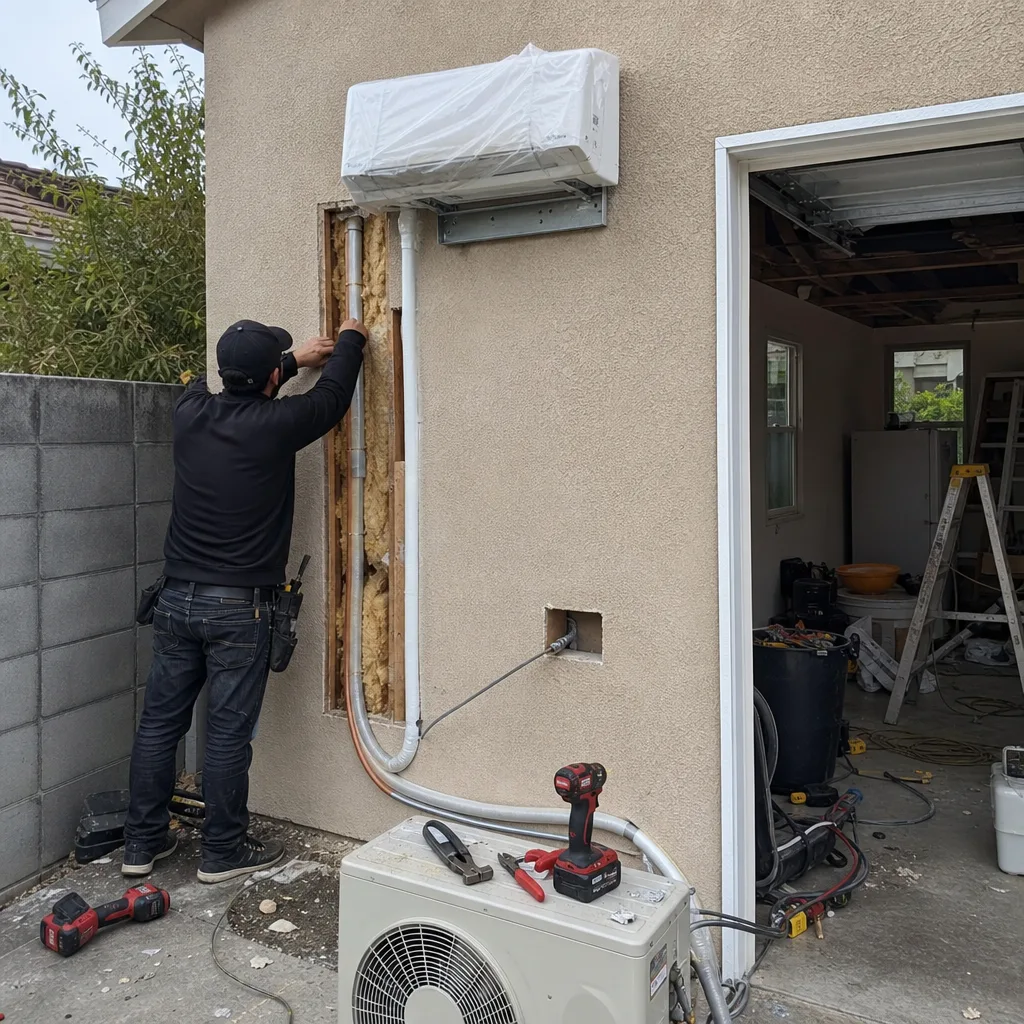
There is a narrow, legitimate zone where owner participation reduces cost without triggering licensing, insurance, or resale problems. This zone opens after final rough inspection and closes before final occupancy inspection.
Work You Can Legally and Safely Perform Post-Rough Inspection:
- Interior painting: Walls, ceilings, trim, doors. Material cost: $800-$1,800 for a 500-square-foot ADU. Professional labor value: $2,500-$4,500. Your savings: $1,700-$2,700.
- Finish carpentry: Baseboards, door casings, closet shelving, cabinet hardware. Material cost: $600-$1,400. Professional labor value: $1,800-$3,200. Your savings: $1,200-$1,800.
- Hard flooring installation: LVP, laminate, or engineered hardwood (not tile, which requires licensed preparation). Material cost: $2,000-$4,500. Professional labor value: $2,500-$4,000. Your savings: $2,500-$4,000.
- Landscaping and hardscaping: Planters, walkways, non-structural retaining walls under 30 inches. Material cost: $1,500-$5,000. Professional labor value: $3,000-$8,000. Your savings: $1,500-$3,000.
- Window coverings and fixtures: Blinds, curtain rods, light fixtures (on existing boxes), ceiling fans with existing support. Material cost: $400-$1,200. Professional labor value: $800-$2,000. Your savings: $400-$800.
Total realistic DIY savings in this zone: $8,000-$18,000 on a typical project. Not trivial, but not the $60,000-$100,000 some homeowners imagine when they consider “building it myself.”
Work That Appears DIY-Able But Creates Hidden Costs:
- Demolition: Seems straightforward. But improper demolition of a garage for conversion can damage the existing slab, trigger asbestos or lead testing requirements, and void warranty coverage on adjacent structures. We’ve seen $4,000 “saved” in demolition lead to $12,000 in slab repair.
- Framing: Physically possible for a skilled carpenter. But framing inspection failures in Chino Hills are common for owner-builders who misread the prescriptive tables in the California Residential Code or fail to account for shear wall requirements in fire zones. Each failed inspection costs 2-3 weeks.
- Drywall: Hanging is learnable. But the Level 5 finish required for proper paint appearance, and the fire-taping requirements at garage-ADU separation walls, are where owner-builders typically fall short. Redo work costs more than initial professional installation.
Cost Comparison: DIY vs. Professional Design-Build in Chino Hills
The following table shows all-in project costs for a typical 500-square-foot garage conversion ADU in Chino Hills, comparing owner-builder assumptions against professional design-build delivery. These are 2024-2025 market ranges based on our project history and current subcontractor pricing.
| Cost Category | Owner-Builder Estimate | Professional Design-Build (Ellery ADU Studio) |
|---|---|---|
| Design & permit set | $3,500-$7,000 (freelance drafter, no engineer stamp) | Included in contract - architect-prepared, engineer-stamped |
| Permit fees (Chino Hills) | $4,200-$6,800 | $4,200-$6,800 (pass-through, no markup) |
| Foundation/slab work | $5,500-$9,000 | $5,500-$9,000 |
| Framing & structural | $8,000-$14,000 (self-performed or unlicensed crew) | $10,000-$16,000 (licensed, warranted) |
| Electrical (C-10 required) | $8,500-$14,000 | $8,500-$14,000 |
| Plumbing (C-36 required) | $6,000-$11,000 | $6,000-$11,000 |
| HVAC (C-20 required) | $5,500-$9,500 | $5,500-$9,500 |
| Title 24 & HERS | $2,800-$5,200 | $2,800-$5,200 |
| Insulation & drywall | $4,500-$7,500 | $5,500-$8,500 |
| Flooring, paint, fixtures (owner DIY zone) | $4,800-$12,500 (materials only) | $8,000-$18,000 (materials + labor) |
| Builder’s risk insurance | $1,200-$3,500 | Included in contractor coverage |
| Project management (your time) | 400-600 hours @ $0 (unvalued) | Included - dedicated project manager |
| Contingency (typical owner-builder overrun) | $8,000-$20,000 (unbudgeted) | 5-10% structured contingency, tracked |
| Total All-In Range | $72,500-$130,000+ (with unbudgeted risk) | $85,000-$125,000 (written price, fixed scope) |
The critical difference is not the bottom-line number. It is the distribution of risk and the certainty of the number itself. Under Ellery ADU Studio Chino Hills home and our Haven Standard, Clause 1, the price is written before work starts. The owner-builder discovers their true cost as they go - and our experience, across 900+ ADUs since 2015, is that most discover it exceeds their professional quote.
For garage conversion ADU in Chino Hills projects specifically, the foundation condition is a common surprise. In the rolling terrain of Chino Hills, many garages were built with stepped or thickened-edge slabs that require engineering analysis for ADU conversion. The owner-builder who assumes their slab is “fine” often learns otherwise at first inspection. Our ADU Design & Permitting in Chino Hills process includes geotechnical review of existing conditions before permit submission, not after construction starts.
Common Mistakes to Avoid
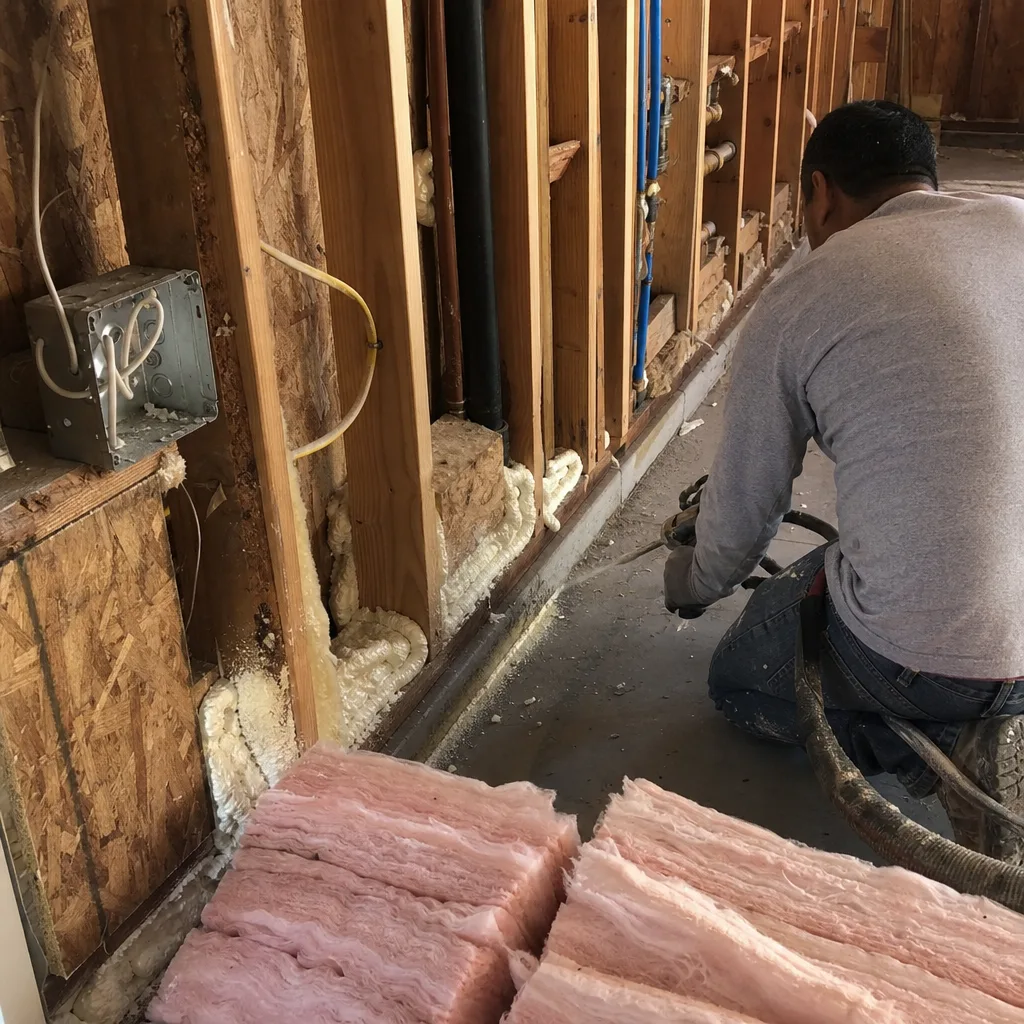
- Assuming the owner-builder exemption covers all trades. It doesn’t. Electrical, plumbing, HVAC, and fire protection require licensed subcontractors regardless of your status. We’ve seen Chino Hills permits revoked mid-project when inspectors discovered unlicensed electrical work.
- Neglecting the resale disclosure in investment calculations. The one-year disclosure requirement affects buyer financing, particularly FHA and VA loans. If you plan to sell or refinance within 18 months of project completion, the owner-builder path may cost more than it saves.
- Skipping builder’s risk insurance to “save money.” A single theft of materials or weather event during construction can destroy the project budget. Standard homeowner’s policies exclude construction-phase losses for owner-builders.
- Using online prefab quotes as permit-ready budgets. A Tuff Shed studio quote or modular unit price does not include Chino Hills permit fees, foundation work, utility connections, or Title 24 compliance. These additions typically add 40-70% to the base unit cost.
- Failing to verify fire overlay requirements before design. Chino Hills properties in Very High Fire Hazard Severity Zones have specific ignition-resistant construction requirements. Designing without this knowledge produces permit sets that are rejected at plan check, wasting 4-8 weeks.
- Undervaluing project management time. Owner-builders consistently underestimate the hours required: permit coordination, subcontractor scheduling, material procurement, inspection scheduling, and rework management. At 400-600 hours for a typical ADU, this is equivalent to 10-15 weeks of full-time work.
When to Call a Professional
Call a professional when any of the following apply: your property is in a Chino Hills fire hazard zone; your project requires a panel upgrade or new electrical service; your garage slab condition is unknown; you plan to sell or refinance within two years; you cannot dedicate 20+ hours weekly to project management; or you need a fixed, written price before committing funds.
Ellery ADU Studio Chino Hills offers free estimates in Chino Hills. Every estimate includes a written price before any work starts, per Haven Standard Clause 1. We also provide a Free Second Opinion on any written estimate you already have in hand - we’ll review the scope, identify gaps, and explain where the numbers come from. Call (951) 456-4467 to schedule.
Frequently Asked Questions
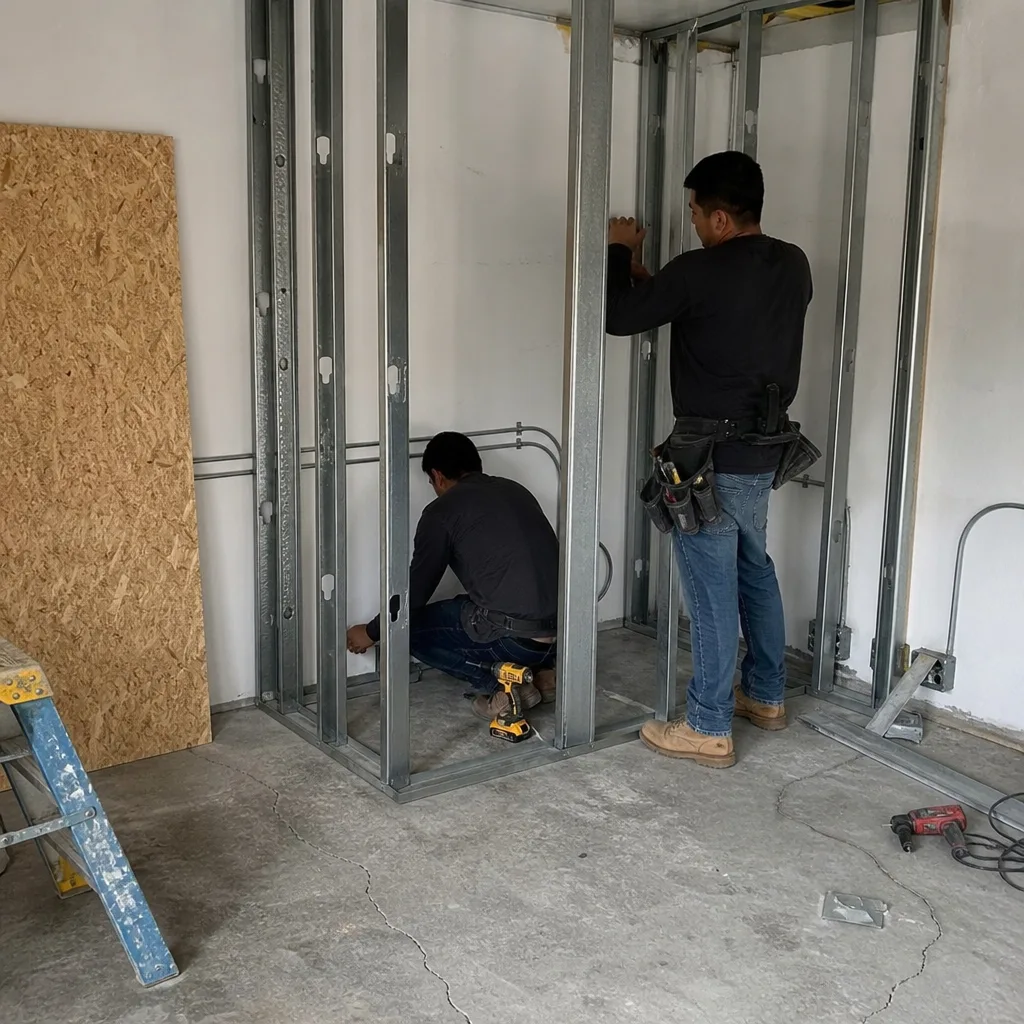
A professional design-build ADU in Chino Hills typically runs $85,000-$125,000 all-in for a garage conversion and $180,000-$320,000 for a new detached unit, with the price written before work starts. DIY owner-builder projects often appear to cost 15-25% less on paper but frequently exceed professional quotes when unbudgeted contingencies, insurance, and rework are included. Call (951) 456-4467 for a written estimate on your specific site - estimates are free.
No. California law requires licensed C-10 electrical and C-36 plumbing contractors for all electrical and plumbing work, regardless of owner-builder status. The owner-builder exemption covers general construction only. Unlicensed electrical or plumbing work will fail inspection and may result in permit revocation. Call (951) 456-4467 if you need referrals to licensed subcontractors we work with regularly.
It affects the process for one year. California requires disclosure of owner-builder status to buyers if you sell within one year of certificate of occupancy. This disclosure complicates FHA and VA financing and may trigger additional inspections or buyer concessions. After one year, no disclosure is required. If resale timing matters to your investment plan, the professional path eliminates this friction entirely.
You need builder’s risk insurance or a course of construction endorsement on your homeowner’s policy, plus workers’ compensation if you employ anyone. Standard homeowner’s insurance excludes construction-phase losses and liability for worker injuries when you act as your own contractor. Without proper coverage, a single incident can exceed the savings of DIY labor. Verify coverage with your insurer in writing, not by phone.
You can purchase a prefab unit, but you cannot bypass the permit, foundation, utility, and inspection requirements that require licensed professionals. Brands like Mighty Buildings or Plant Prefab provide engineered units, but Chino Hills still requires local permit adaptation, foundation engineering, licensed electrical and plumbing connection, and HERS verification. The unit is a component, not a complete solution. We coordinate prefab systems within our single-contract model at New Detached ADU in Chino Hills.
Owner-builder projects in Chino Hills typically take 12-18 months from initial planning to certificate of occupancy, compared to 8-14 months for professional design-build delivery. The difference comes from permit set preparation (owner-builders often submit incomplete sets), inspection scheduling (professionals have established relationships and know the inspection queue), and rework (professional projects fail inspection less often). Time is a cost, particularly if you are carrying financing or missing rental income.
If the finished ADU is not built to the permitted drawings, we make it right - in writing, before the project starts, under Haven Standard Clause 7. This includes structural, mechanical, and finish elements that deviate from the approved permit set. The promise is backed by our documented photo record from every site visit, which we provide to you as evidence of what was found and what was done. Not a summary. Evidence. Call (951) 456-4467 to review the full Haven Standard before you decide.
The Bottom Line
The DIY-versus-professional question for Chino Hills ADUs is not about whether you are capable of swinging a hammer. For more guides & resources on planning, building, and maintaining an ADU in Chino Hills, explore our blog. It is about which portions of the project California law permits you to perform, which require licensed professionals regardless of your willingness, and what the insurance, resale, and time costs are when those lines are crossed. The owner-builder exemption is real but narrow. The trades you must subcontract are expensive and non-negotiable. The fire overlay and Title 24 requirements in Chino Hills demand licensed professional documentation you cannot produce yourself. And the one-year resale disclosure reshapes the investment math for anyone who views their ADU as a liquid asset.
The genuine savings zone for owner participation is interior finish work after rough inspection - painting, flooring, fixtures, landscaping - worth perhaps $8,000-$18,000 in labor value. Against this, weigh 400-600 hours of project management, insurance costs, permit delay risk, and the contingency of rework. For most Chino Hills homeowners who bought at peak prices and need predictable outcomes, the professional design-build path, with a written price before work starts and documented delivery, is the lower-risk choice.
Written by Nadia Ellery, Owner at Ellery ADU Studio Chino Hills, serving Chino Hills since 2015.