
Plant Prefab Garage Conversion ADU: The Chino Hills Owner’s Guide
We stock and install Plant Prefab-compatible garage conversion ADU components in Chino Hills, with most replacement parts available same-day and installed within one visit. Typical installed pricing runs $340-$780 for standard hardware assemblies and $1,200-$2,800 for structural or utility-integrated components, depending on your specific Plant Prefab series and what we find during our documented inspection. Most owners first notice trouble when the unit’s climate seal fails around the garage door transition, the electrical subpanel throws intermittent breakers, or the mini-split line set shows pressure drops - symptoms that look minor until you realize the Plant Prefab envelope was engineered as a system, not a collection of parts.
Which Plant Prefab Models This Applies To
Plant Prefab builds two primary product lines that reach Chino Hills garage conversions: the LivingHome series (LH1 through LH10, with LH6 and LH8 most common for 400-650 square foot garage adaptations) and the custom ADU program that uses the same panelized wall system but with site-specific dimensions. The critical identifier is the data plate mounted on the electrical subpanel door - it lists the plant build date, module serial prefix, and the Haven-compatible envelope specification.
Parts compatibility breaks down by build era. Pre-2022 LivingHome units use a 2×6 wall cavity with Rockwool insulation and a specific aluminum-clad window flange profile that Plant Prefab sourced from a single California supplier. Post-2022 builds shifted to a 2×8 cavity with ZIP System sheathing and a different flange geometry. The parts are not interchangeable. We carry both OEM and aftermarket equivalents for the pre-2022 line; for post-2022 units, we currently stock OEM only because the ZIP integration tolerances are tight enough that third-party flanges have failed inspection twice in Chino Hills - once on a project near English Springs Road and once on a hillside lot above Soquel Canyon Parkway where the wind exposure added lateral load to the assembly.
For electrical components, the subpanel is a standard Siemens or Square D load center depending on build month, but the bus bar configuration and breaker sizing were specified by Plant Prefab’s electrical engineer for the exact module layout. We match that specification from our stock rather than guessing at the hardware store.
Signs Your Plant Prefab Garage Conversion ADU Is Failing
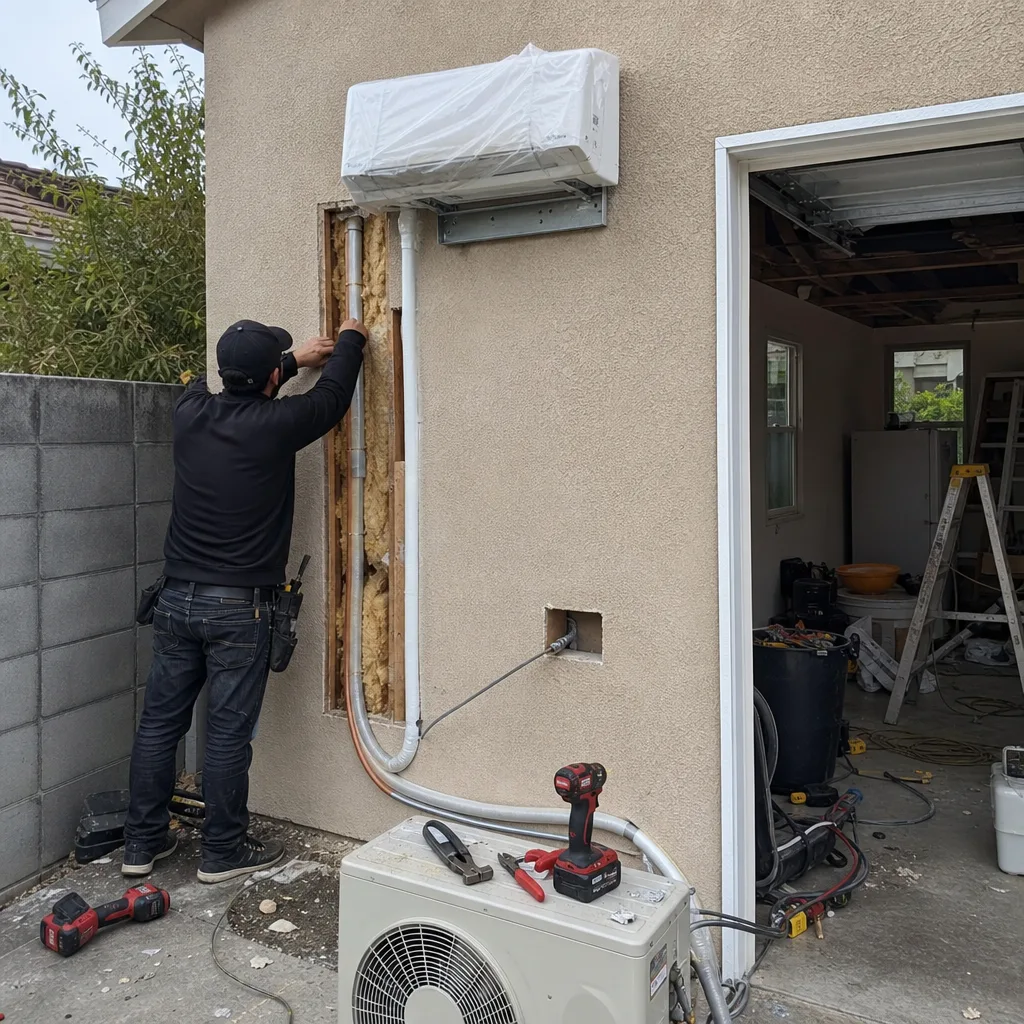
- Climate seal degradation at the garage door header. The Plant Prefab wall panel meets the existing garage header with a proprietary compression seal that takes the thermal expansion differential. When it hardens - typically after 6-10 years in Chino Hills’ inland heat, faster on south-facing walls - you get visible gaps, then insect intrusion, then conditioned air loss that shows up on your SCE bill.
- Intermittent breaker trips on the 240V mini-split circuit. The line set runs through a factory-penetrated wall panel with a grommet system that can chafe the wire jacket where it exits the panel. The breaker holds under light load but trips when the compressor cycles hard, which in Chino Hills happens every August afternoon when the attic above the garage hits 140°F.
- Window flange leaks during wind-driven rain. The aluminum flange-to-sheathing joint relies on a butyl tape that Plant Prefab applied in-factory. On hillside lots with exposure to the Santa Ana flow - common north of Carbon Canyon Road - the tape can separate at the upper corners first, showing as interior drywall staining that tracks diagonally from the header.
- Floor-level moisture at the slab transition. Plant Prefab modules include a pressure-treated sill gasket, but the existing garage slab often has no vapor barrier or an inadequate one by current code. Capillary moisture wicks up, meets the cool module floor, and you get efflorescence or, in worse cases, OSB swelling at the wall base.
- Mini-split refrigerant pressure drop with no visible line damage. The flare connection at the exterior disconnect is factory-torqued but can work loose in the first 2-3 years of thermal cycling. The leak is slow, the pressure drop is gradual, and the symptom is reduced cooling capacity on 95°F days - exactly when you notice.
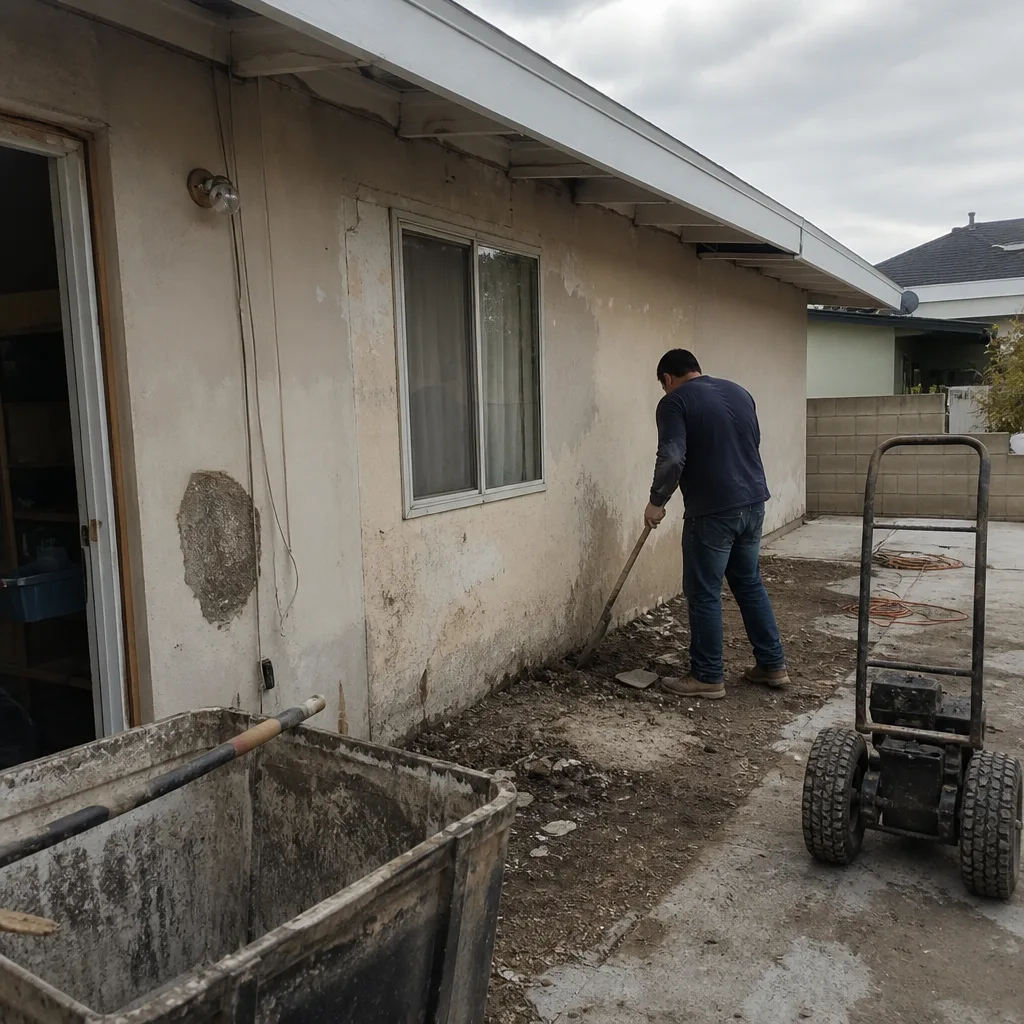 Before
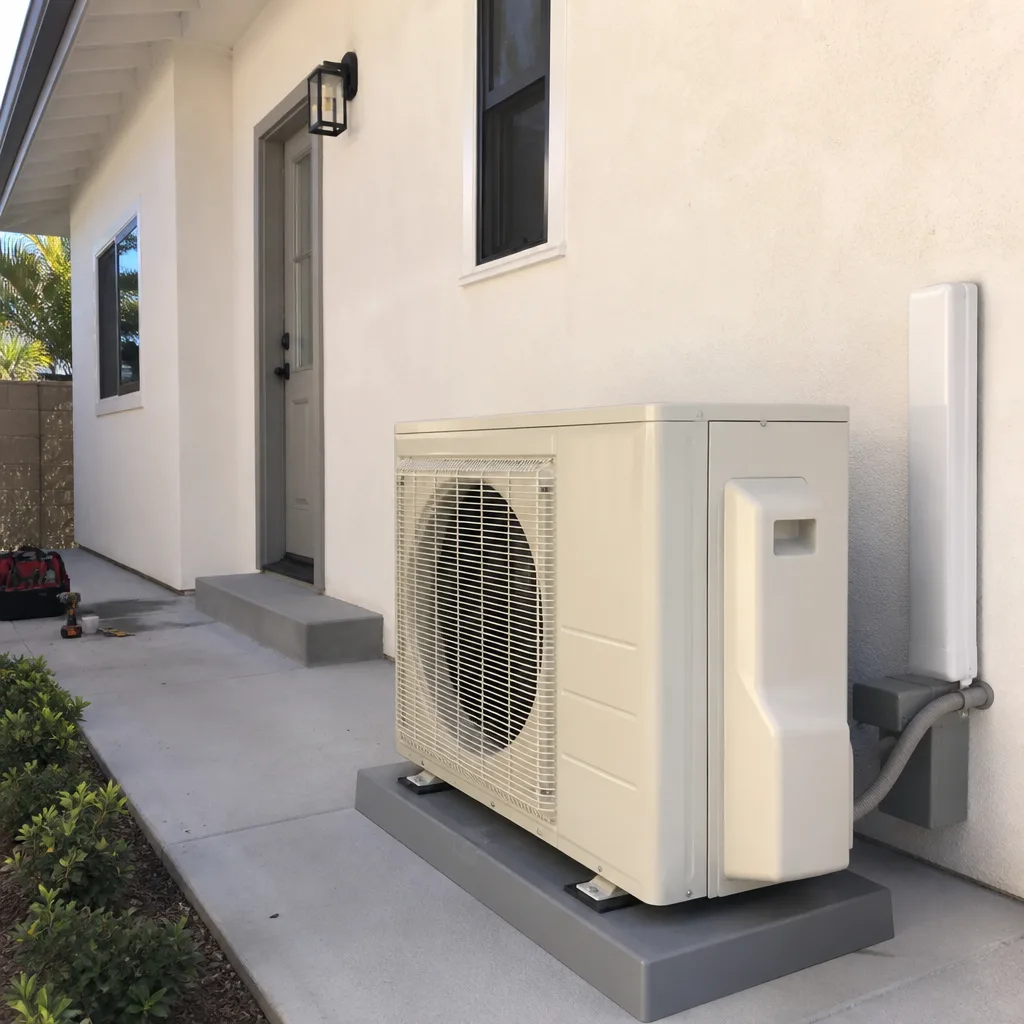 After
AfterReplacement Cost & What’s Included
| Component | Typical Range (Chino Hills) | What’s Included |
|---|---|---|
| Climate seal assembly (header transition) | $340-$520 | OEM or matched aftermarket seal, removal of degraded material, surface prep, installation, thermal imaging verification |
| Electrical subpanel / breaker replacement | $680-$1,100 | Load calculation verification, matched breaker set, bus bar inspection, torque-spec termination, city inspection coordination if required |
| Window flange reflash (per opening) | $420-$780 | Flange removal, substrate repair, new butyl tape, reflange, exterior sealant, water test |
| Sill gasket / vapor barrier retrofit | $1,200-$2,800 | Interior finish removal as needed, gasket replacement, interior vapor barrier installation, finish restoration, documented photo record |
| Mini-split line set repair (flare to full replacement) | $380-$1,450 | Leak detection, nitrogen purge, flare rework or line replacement, evacuation, recharge, performance verification |
What drives the range: accessibility (how much interior finish we remove and restore), whether the existing component was damaged by an upstream failure (a leak that rotted adjacent framing, for instance), and whether the repair triggers a Chino Hills Building & Safety inspection requirement. Under Haven Standard Clause 1, the written price you receive before work starts locks the scope - no change orders, no door-side surprises. The 365-Day Done Right Promise covers the installation and the part. Every visit produces a documented photo record, delivered to you within 24 hours.
DIY or Call Us?
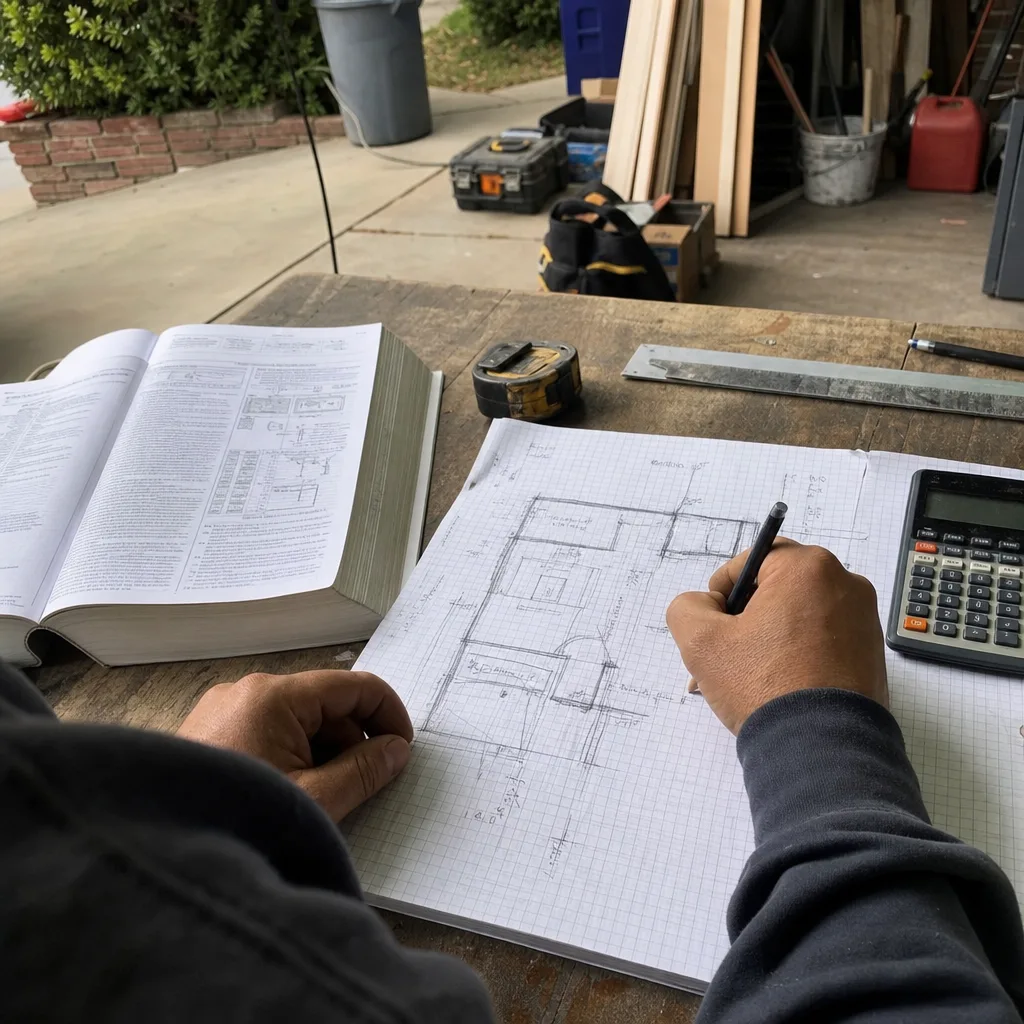
There is honest work a homeowner can do here and honest work that risks the module warranty or personal safety.
What you can safely check: the data plate information (photograph it for reference), visible seal condition at the garage door header, breaker positions and any burn marks at the panel, and the exterior condenser pad level. These observations help us bring the right parts on the first trip.
What we do not recommend DIY for: electrical subpanel work inside a factory-built module (the grounding path differs from site-built construction and inspectors in Chino Hills flag it routinely), refrigerant handling (EPA 608 required, plus the mini-split charge is measured in ounces - not a guess-and-hose situation), and any seal replacement that involves the structural panel joint (improper sequencing voids the envelope warranty and traps moisture). The paperwork should explain itself. If it doesn’t, the project isn’t ready.
We are an independent service provider - not affiliated with Plant Prefab - and we coordinate with their technical team when warranty questions arise. Call (951) 456-4467 to schedule your free estimate. We bring the documented inspection, the matched parts, and the written price before any work begins.
FAQs
The climate seal assembly typically lasts 8-12 years in Chino Hills’ inland climate, though south- and west-facing exposures with direct afternoon sun can see 6-8 year lifespans. The mini-split flare connection, if properly torqued at installation, should hold 10-15 years; the ones that fail early usually trace to thermal cycling stress on hillside lots with greater temperature swing. Call (951) 456-4467 for an exact assessment of your unit - estimates are free.
Electrical breakers and refrigerant flares are replace-only - no repair protocol meets code or manufacturer specification. Climate seals can sometimes be spot-repaired if degradation is under 30% of the run length, but we disclose the failure probability of the remaining material in writing before proceeding. The 365-Day Done Right Promise applies only to full replacement installations. Call (951) 456-4467 to schedule your free estimate.
Standard hardware assemblies - climate seals, breakers, flares - run 2-4 hours on site. Structural or utility-integrated work requiring interior finish removal and restoration spans 1-3 days depending on drying times for sealants and finishes. We coordinate Chino Hills inspection scheduling when required, and we do not leave until the documented photo record is complete. Call (951) 456-4467 for a timeline specific to your unit.
We stock pre-2022 LivingHome climate seals, flanges, and standard electrical components on our Chino Hills service vehicle. Post-2022 ZIP System-integrated parts and custom-program components are OEM-ordered with 3-5 day lead time, though we maintain an emergency overnight channel for envelope failures that compromise habitability. Every part is verified against your data plate before ordering. Call (951) 456-4467 to confirm availability for your specific build.
Written by Nadia Ellery, Owner, Ellery ADU Studio Chino Hills at Ellery ADU Studio Chino Hills, serving Chino Hills and nearby areas.