
James Hardie Junior ADU Conversion: The Chino Hills Owner’s Guide
We stock and install James Hardie-compatible junior ADU conversion systems in Chino Hills, with typical installed pricing running $145,000-$215,000 all-in, drawings through final inspection. Most Chino Hills homeowners discover their Hardie system needs attention when moisture readings spike behind the siding, or when the original builder’s installation gaps start showing stress after five to seven years of inland-heat cycling. We carry HardiePanel HZ5 and HZ10 series inventory for same-week mobilization on confirmed conversions.
The paperwork should explain itself. If it doesn’t, the project isn’t ready.
Which James Hardie Models This Applies To
James Hardie manufactures two cladding systems relevant to junior ADU conversions in Chino Hills: the HardiePanel vertical siding line (primarily HZ10 for our inland climate zone) and the HardiePlank lap siding used on gable-end accents and porch ceilings. The critical compatibility gotcha is the HZ5 versus HZ10 designation - HZ5 is formulated for freeze-thaw cycles and will delaminate prematurely in Chino Hills’ 100°F-plus summer peaks. We verify this on every material takeoff.
Identification is straightforward: the back of each panel carries a stamped code - HZ10 followed by a lot number and manufacturing date. For panels installed 2015-2020, also check for the older “HardieZone” stamp; these are pre-reformulation and carry different expansion coefficients that affect flashing details at window heads. We source OEM Hardie through authorized distribution in Pomona, though we also specify quality aftermarket trim and fastener equivalents where Hardie’s lead times stretch past permit expiration. The decision point is always the same: does the aftermarket component carry a 30-year substrate warranty and match the James Hardie ColorPlus fade curve? If not, we stay OEM.
Signs Your James Hardie Junior ADU Conversion Is Failing
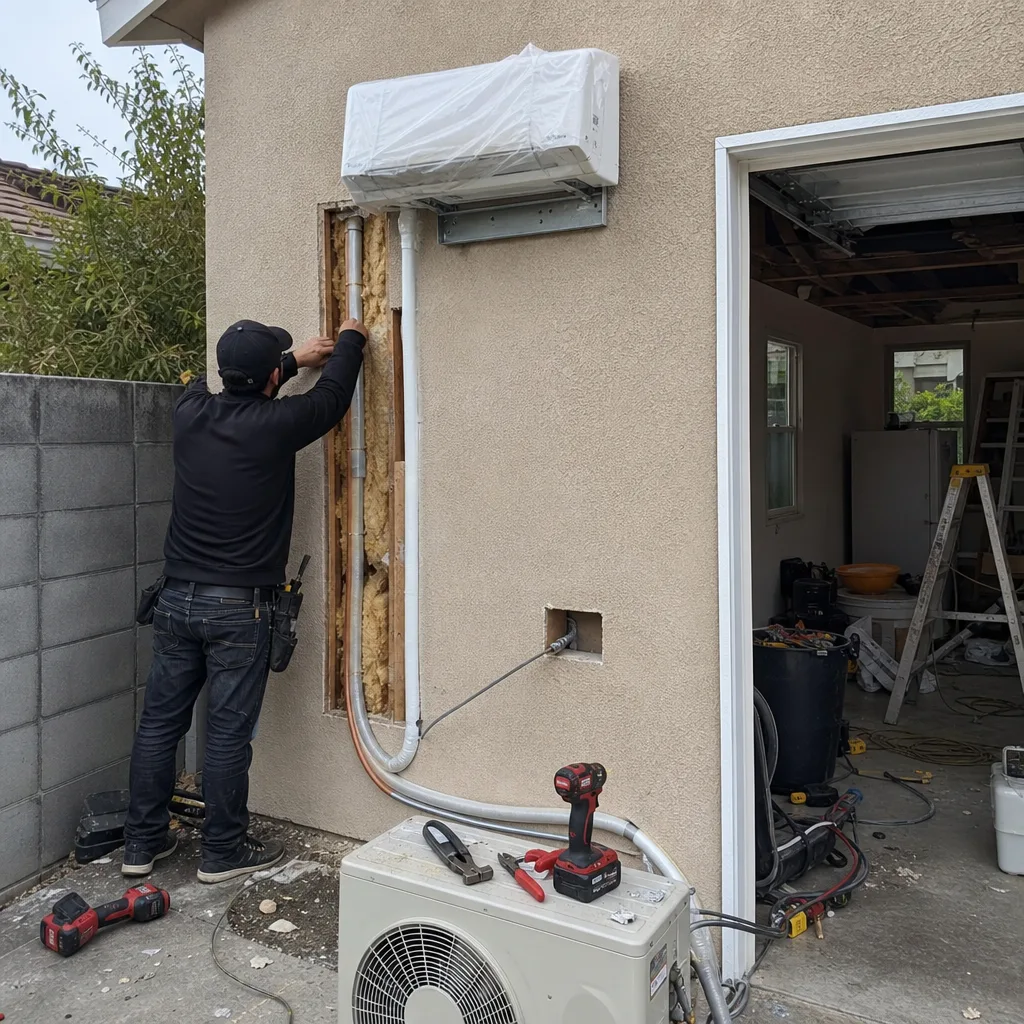
- Soft spots at panel seams near rooflines. This indicates capillary failure in the joint sealant, usually from the original installer’s use of non-Hardie-compatible caulk. The HZ10 panel edge swells when water wicks past the seal, and the damage propagates inward through the weather-resistant barrier.
- Chalking or color shift on south-facing walls. Chino Hills’ UV index peaks 20% above coastal zones. ColorPlus finishes rated for 15 years often show degradation at year 8-10 here. The underlying fiber cement is sound, but the aesthetic failure triggers HOA notices and resale complications.
- Fastener pops or “oil-canning” between studs. HardiePanel requires fastening on 16-inch centers maximum; 24-inch spacing was common on cost-cut builds 2015-2018. The 1/4-inch expansion gap at panel edges compresses, then the panel bows between attachment points.
- Window surround gaps opening at head flashing. James Hardie’s specified 1/4-inch clearance above window flanges gets ignored during rushed trims. Thermal cycling in Chino Hills - 40°F winter lows to 105°F summer highs - exploits that gap, peeling the WRB backward.
- Interior humidity spikes in converted spaces. Junior ADUs have limited mechanical ventilation. When Hardie system integrity fails, the 5.5-inch stud cavity becomes a moisture reservoir. We see this most on north-facing conversions above Carbon Canyon Road, where marine layer linger extends morning dew periods.
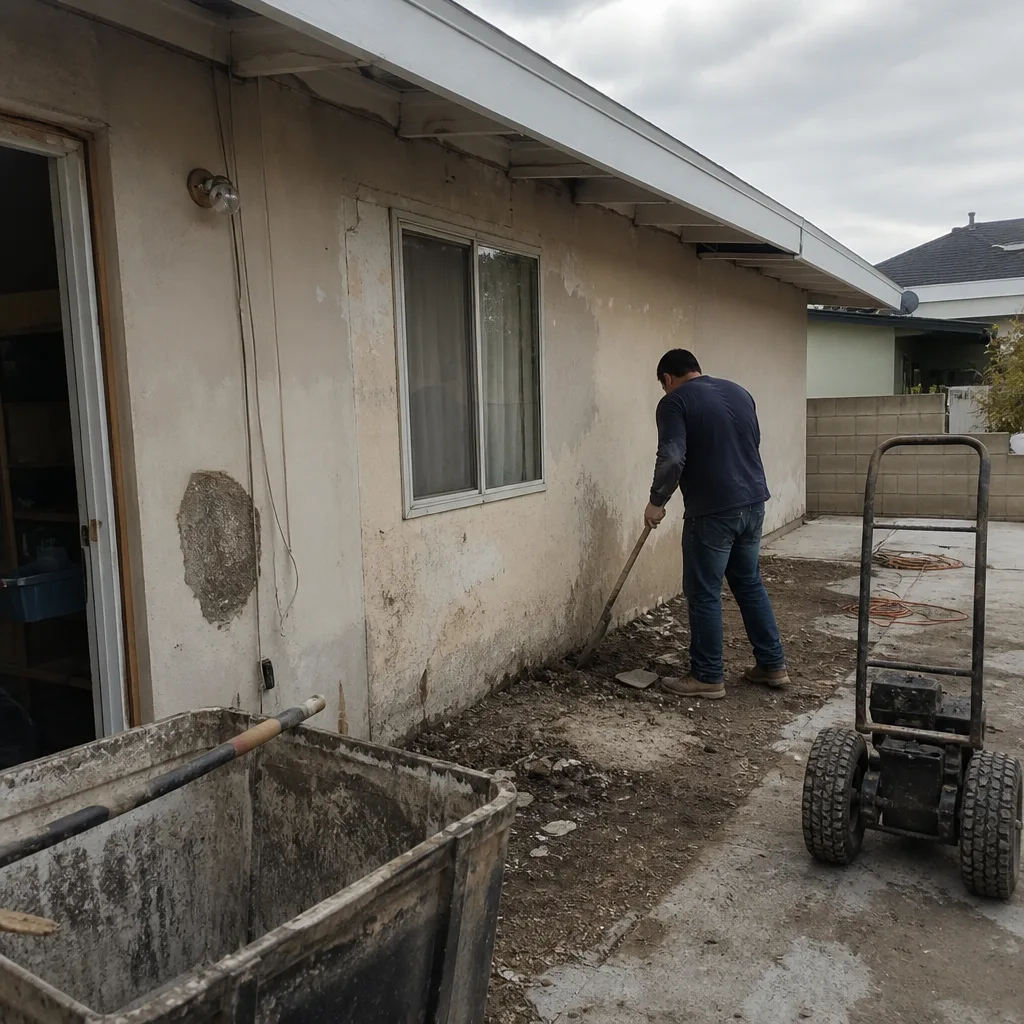 Before
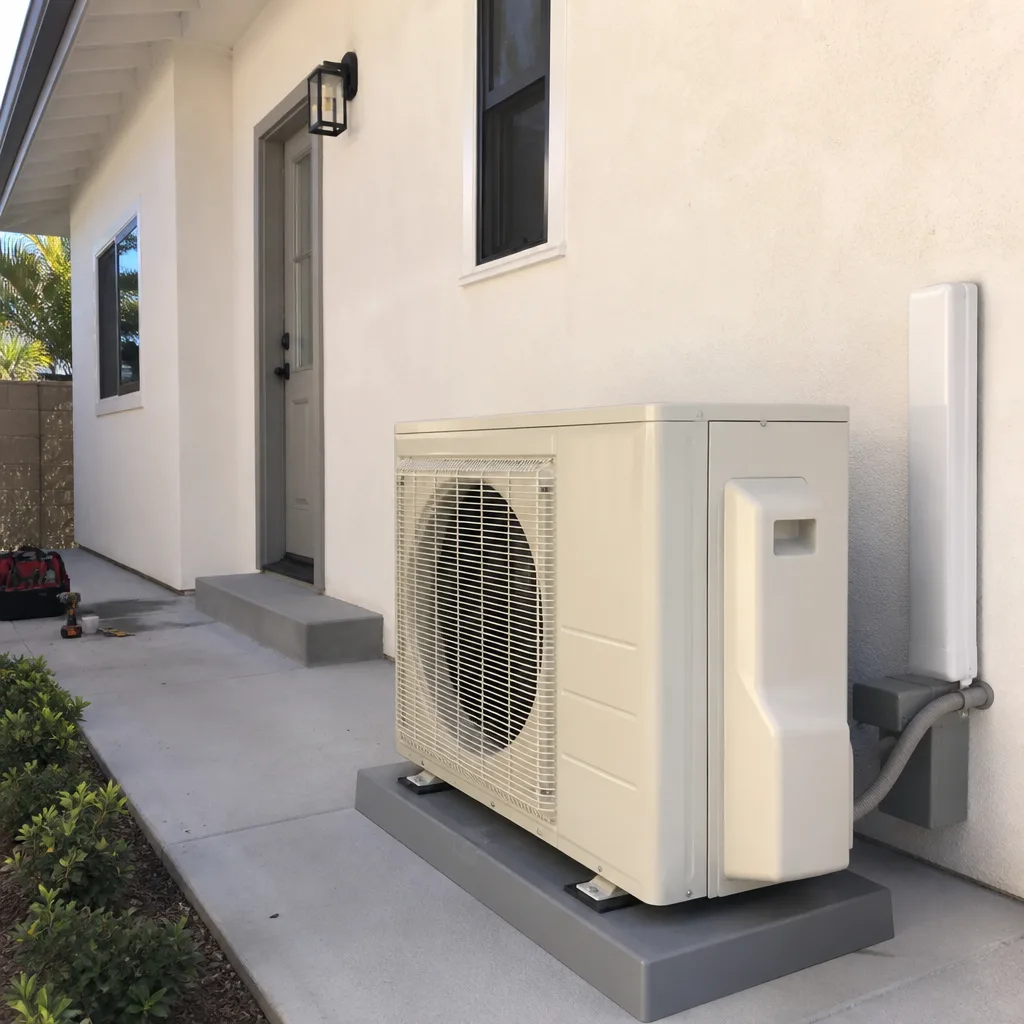 After
AfterReplacement Cost & What’s Included
Junior ADU conversion with James Hardie recladding in Chino Hills typically runs $145,000-$215,000 all-in, drawings through final inspection. The spread reflects three variables: whether the existing structure needs shear-wall upgrades for ADU code compliance (common on pre-1990 garages), the extent of WRB replacement behind failed panels, and whether the electrical service requires panel upsizing for kitchen/laundry loads.
Our line-item structure, per Haven Standard Clause 1, breaks out: design and permit set ($12,000-$18,000), HardiePanel HZ10 with ColorPlus finish ($28,000-$42,000 material and install), weather-resistant barrier and flashing system ($8,000-$14,000), interior rough and finish ($55,000-$85,000), and utilities connection or upgrade ($18,000-$32,000). The written price locks at signing - no change orders for conditions visible at our initial site documentation. We pull all permits and schedule inspections; the 365-Day Done Right Promise covers any deviation from the approved permit set.
DIY or Call Us?
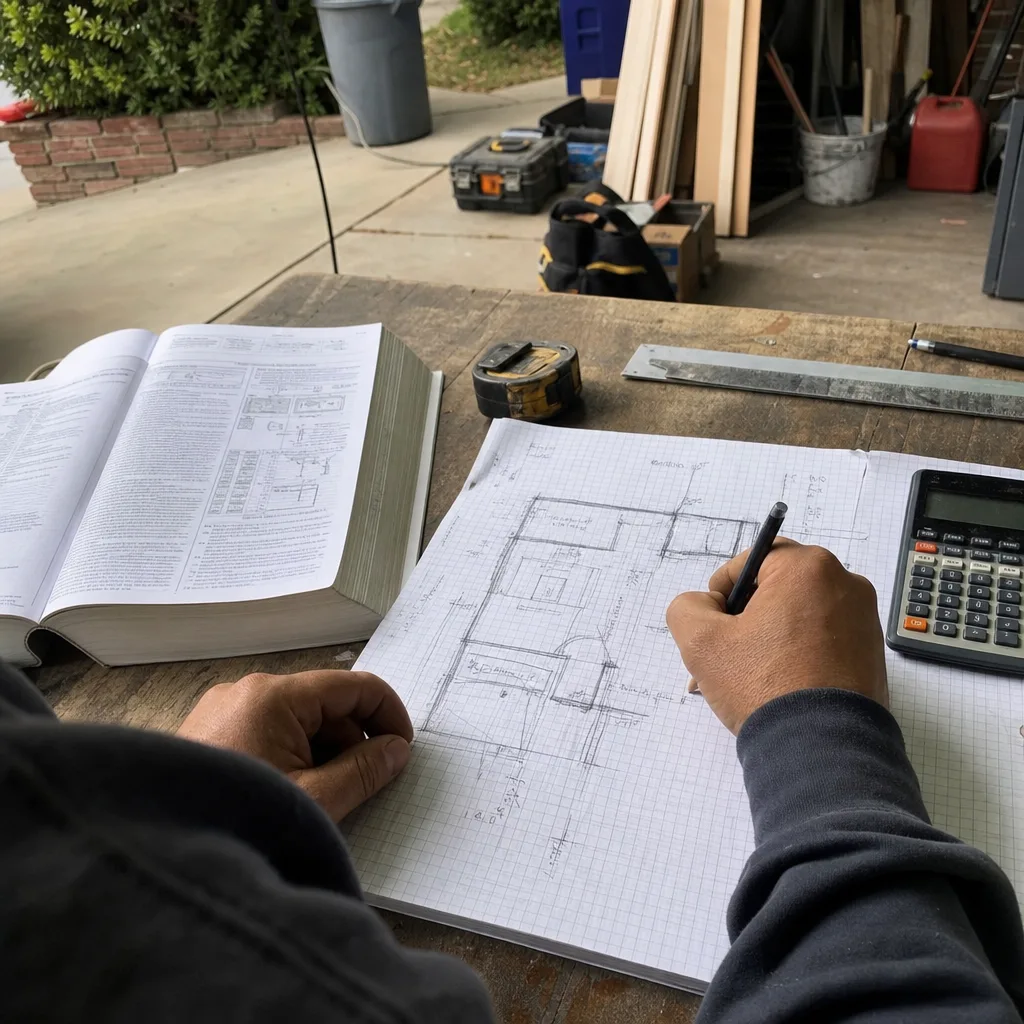
There’s a safe middle ground here, and then there’s the line we don’t cross.
An owner can verify the HZ10 stamp, photograph suspect seams for our review, and confirm fastener spacing with a tape measure. What you should not attempt: removing HardiePanel to inspect the WRB, cutting panels with anything other than a Hardie-approved shear (fiber cement silica exposure is a documented respiratory hazard), or modifying window head flashing without understanding the drainage plane sequence. We’ve repaired three Chino Hills conversions this year where the owner’s “quick fix” routed water into the wall cavity instead of out.
We also stock HardiePanel HZ10 in 4-by-8 and 4-by-10 sheets, plus matching trim and fasteners, on our Chino Hills warehouse rack. Call (951) 456-4467 to schedule your free estimate. We’ll document what we find, photograph the existing conditions, and return a written scope with a single price.
FAQs
The fiber cement substrate itself carries a 30-year limited warranty; in Chino Hills’ inland climate, we see 25-30 years on properly installed HZ10 before structural degradation. The ColorPlus finish warranty is 15 years, though south and west exposures often need refresh at year 10-12. Call (951) 456-4467 for an exact assessment of your current condition - estimates are free.
Spot replacement is feasible when damage is isolated to one or two panels and the WRB behind remains intact. The challenge is ColorPlus color matching; lots vary, and a patch panel from a different production run is visible from the street. We stock current-lot inventory and can verify match before ordering. For widespread failure or WRB compromise, partial recladding is the cost-effective path. Call (951) 456-4467 for an exact quote - estimates are free.
Permit timeline in Chino Hills runs 8-14 weeks for junior ADU plan check, assuming no variance is needed. Construction mobilization to final inspection is typically 14-20 weeks for a garage or interior conversion with Hardie recladding. We coordinate James Hardie material delivery to arrive week 1 of construction, not sit in weather for months. The Haven Standard Clause 5 locks the schedule at contract; no drift without written notice.
We stock HardiePanel HZ10 4-by-8 and 4-by-10 sheets, matching 5/4 trim, and galvanized fasteners rated for the product in our Chino Hills warehouse. ColorPlus colors require a project-specific order with 3-4 week lead time; we time this to permit issuance so material arrives as the notice to proceed clears. For emergency weatherization or HOA compliance deadlines, we can deploy stocked primed panels with site-painted finish as interim protection. Call (951) 456-4467 to confirm current inventory for your color and profile.
Ellery ADU Studio Chino Hills is an independent design-build studio, not affiliated with James Hardie. We specify and coordinate James Hardie, Abodu, Cover, and Dvele systems within our single-contract model.
Written by Nadia Ellery, Owner, Ellery ADU Studio Chino Hills at Ellery ADU Studio Chino Hills, serving Chino Hills and nearby areas.