
James Hardie New Detached ADU: The Chino Hills Owner’s Guide
A new detached ADU built with James Hardie siding in Chino Hills typically runs $285,000-$420,000 all-in, from permit set through final inspection, depending on square footage, foundation type, and whether your lot sits on the hillside grades above Carbon Canyon Road where engineered retaining walls add line items. We specify and coordinate James Hardie systems under our single design-build contract at a written price locked before work starts. If you’re reading this because an existing James Hardie ADU is showing moisture intrusion, seam separation, or fastener corrosion, we stock replacement panels and trim for same-day assessment.
Most Chino Hills owners notice the problem after Santa Ana wind events, when the fiber-cement panels take the kind of thermal stress that causes hairline cracking around fastener heads. Others spot it during routine painting, when the caulk line at the panel joint has pulled away from the substrate. The paperwork should explain itself. If it doesn’t, the project isn’t ready.
Which James Hardie Models This Applies To
James Hardie does not sell a monolithic “ADU kit.” What we specify for detached ADU projects in Chino Hills is a combination of HardiePanel vertical siding (primarily the HZ5 series for our inland-heat climate zone), HardiePlank lap siding, and the accompanying trim, flashing, and moisture-management components. The HZ5 designation matters: it’s engineered for freeze-thaw cycles and higher UV exposure, which is what the south-facing walls of an ADU see in Chino Hills from June through September.
To identify what is on your structure, look for the stamped ink code on the back face of any removed panel, or check your original permit set if Ellery or another design-build studio pulled it. The code includes the plant of manufacture, production date, and HZ series. For replacement matching, we need the exact reveal (the exposed face height, typically 5″, 6″, or 7″ for lap siding) and the thickness (5/16″ for standard HardiePlank, 7/16″ for HardiePanel). ColorPlus prefinished siding cannot be field-matched with paint; you need the original color code or a full-replacement panel from stock. We maintain a cross-reference sheet for the 15 most common ColorPlus formulations used in Southern California ADU builds since 2018.
Aftermarket fiber-cement panels exist (CertainTeed WeatherBoards, Nichiha), but we do not recommend mixing manufacturers on the same wall plane. The expansion coefficients differ, and the joint detail that works for Hardie will gap or buckle with an incompatible substitute. We stock OEM James Hardie panels and trim in our Chino Hills warehouse for this reason.
Signs Your James Hardie New Detached ADU Is Failing
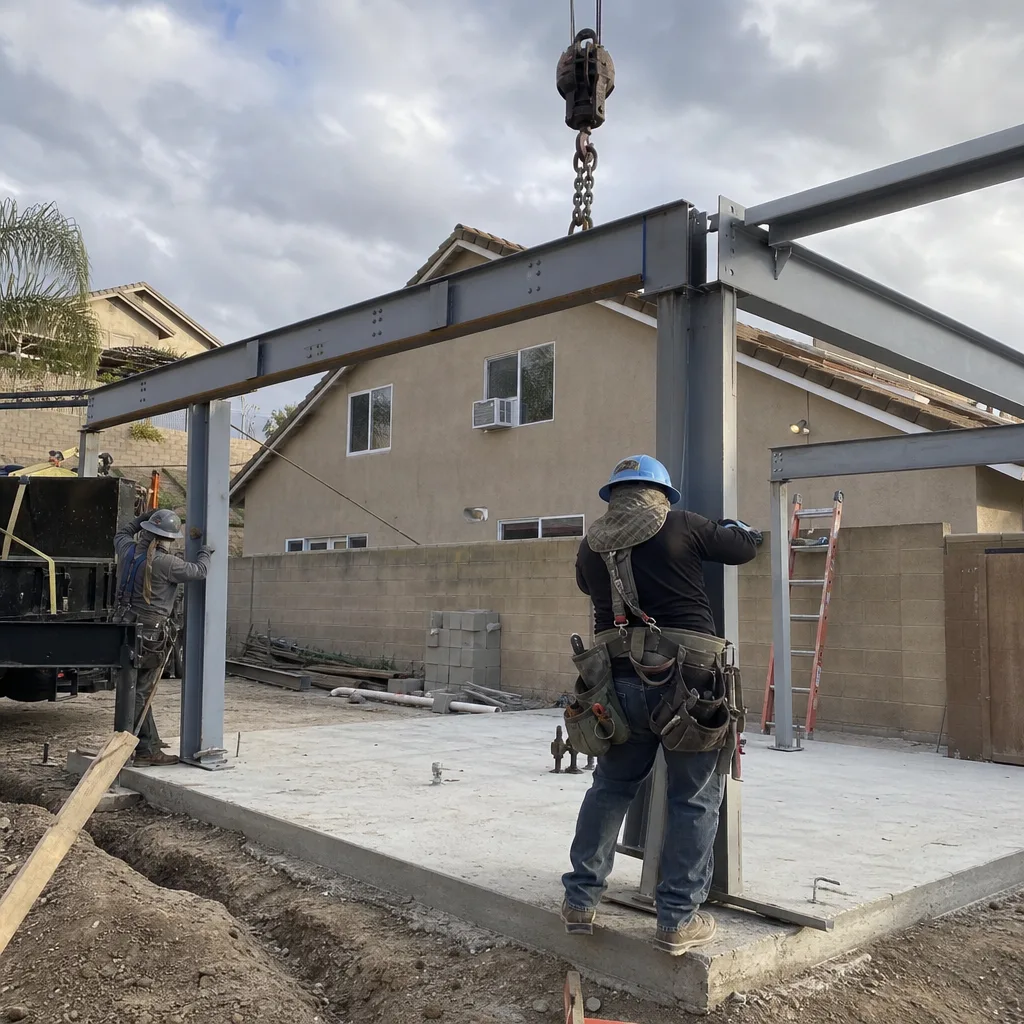
- Hairline cracking at fastener heads. The panel expands and contracts with daily temperature swings; in Chino Hills, a dark ColorPlus finish can reach 160°F surface temperature. If fasteners were over-driven at installation, the panel edge crushes and a crack propagates. We see this most on west-facing walls above the 91 corridor where afternoon heat lingers.
- Caulk failure at vertical joints. James Hardie specifies a 3/16″ gap at butt joints, filled with manufacturer-approved polyurethane sealant. Cheap silicone or skipped backer rod lets the joint open, and Chino Hills’ winter rain (when it comes) finds the gap. The damage is usually hidden until the interior drywall stains.
- Bottom-edge delamination or “fuzzing.” Fiber cement wicks water if the factory seal is compromised or if the panel was cut without edge-priming in the field. On ADUs with grade-level siding, sprinkler overspray accelerates this. The panel swells, the paint bubbles, and the structural integrity degrades from the bottom up.
- Trim board rot at window heads. HardieTrim is not wood, but it is not impervious either. Improper flashing above windows, or the omission of a drip cap, channels water behind the trim. In Chino Hills, the combination of summer bake and winter wet makes this worse than in true desert climates.
- Panel buckling or oil-canning. This is an installation error, not a material defect, but it manifests as a failure. Fasteners spaced too far apart, or panels stored flat and warped before installation, create a wavy wall plane. The fix is removal and re-installation, not a patch.
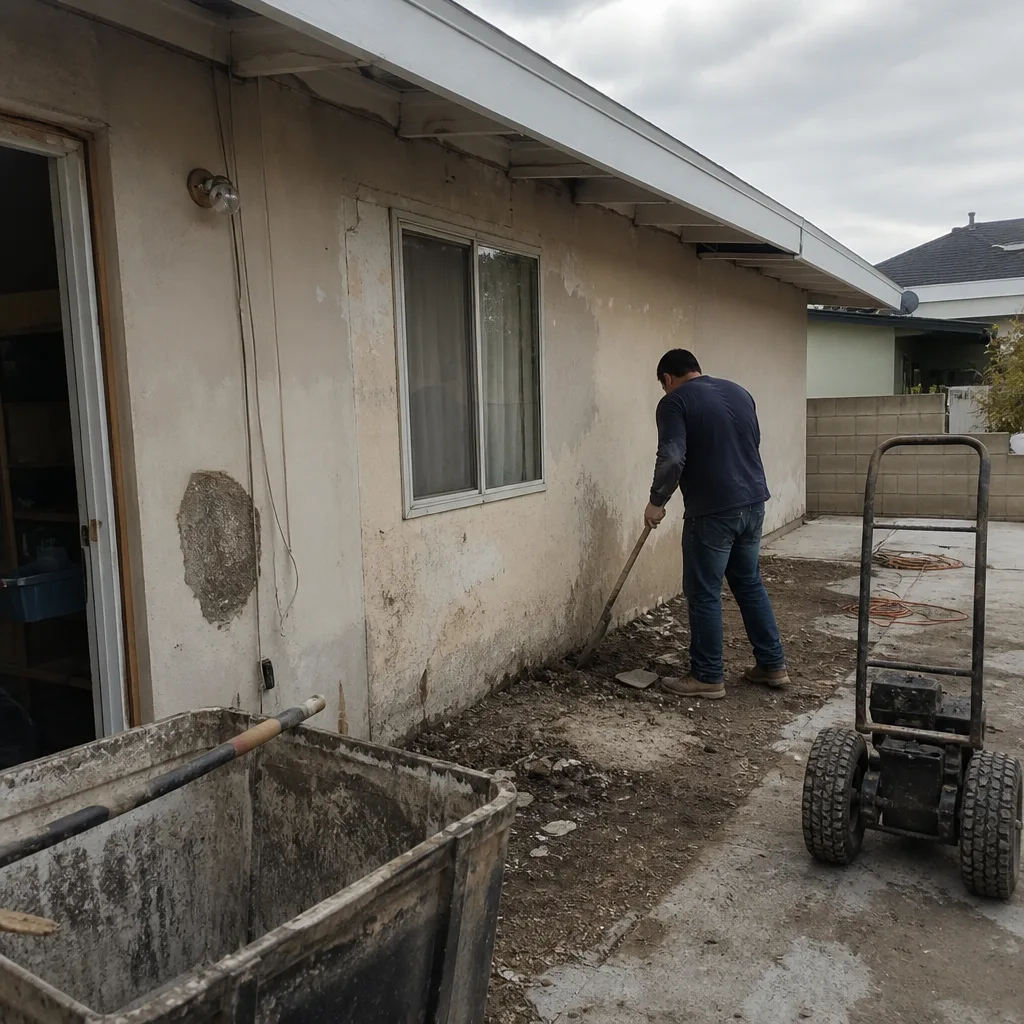 Before
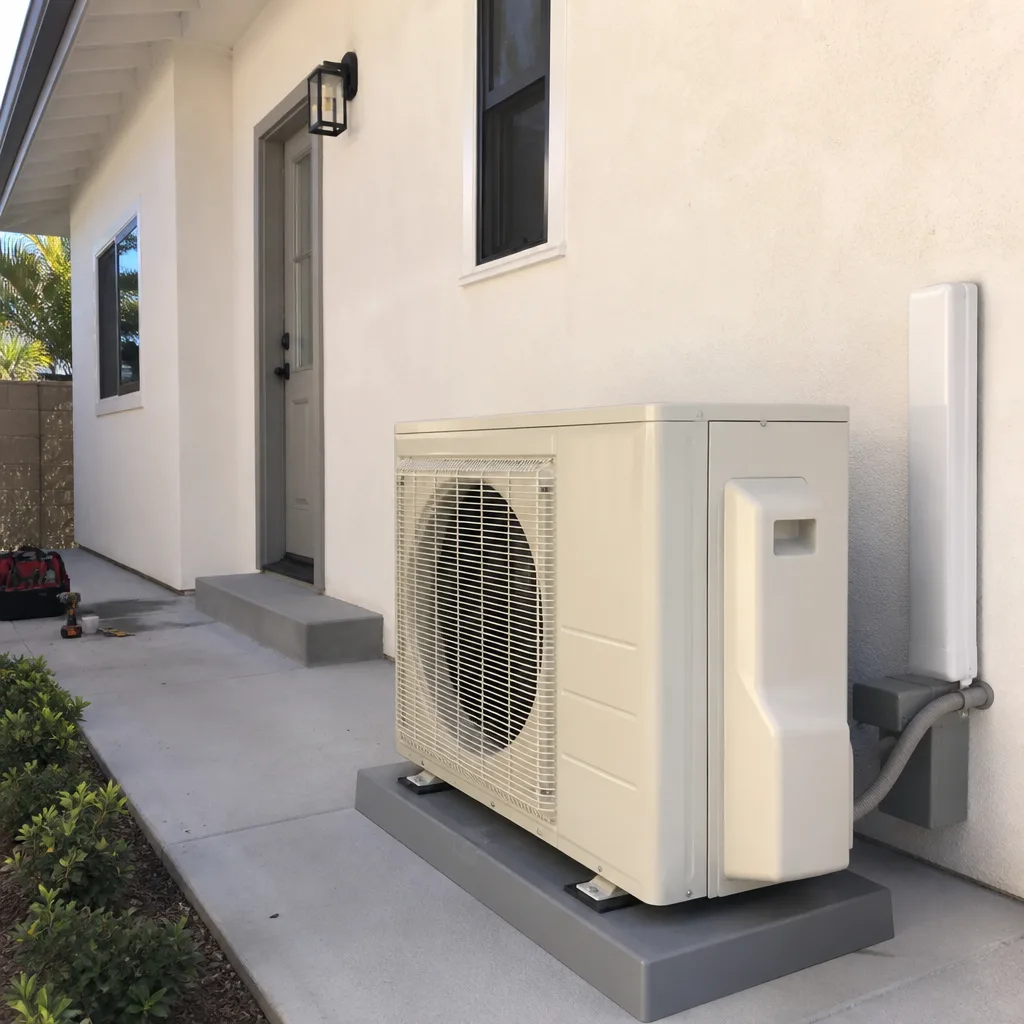 After
AfterReplacement Cost & What’s Included
For a James Hardie ADU in Chino Hills needing panel or trim replacement, our installed pricing breaks down as follows:
| Scope | Typical Range |
|---|---|
| Localized panel replacement (1-2 walls, under 200 sq ft) | $4,200-$7,800 |
| Full-wall re-siding with HardiePlank or HardiePanel | $14,500-$22,000 |
| Trim package replacement (corners, window/door surround) | $3,800-$6,400 |
| Moisture-barrier repair behind removed panels | $1,200-$2,800 |
| Permit amendment or correction notice response | $850-$1,500 |
These ranges include removal, disposal, new material, fasteners to James Hardie’s corrosion-resistant specification, sealant, touch-prime of field cuts, and final paint integration. They do not include full-structure repainting, which we quote separately if the ColorPlus finish has faded unevenly. Under Haven Standard Clause 1, the written price you receive before work starts is the price you pay; no door-side additions when we open the wall and find more damage. Our 365-Day Done Right Promise covers installation workmanship; James Hardie’s 30-year limited product warranty covers manufacturing defects, which we file on your behalf if applicable.
DIY or Call Us?
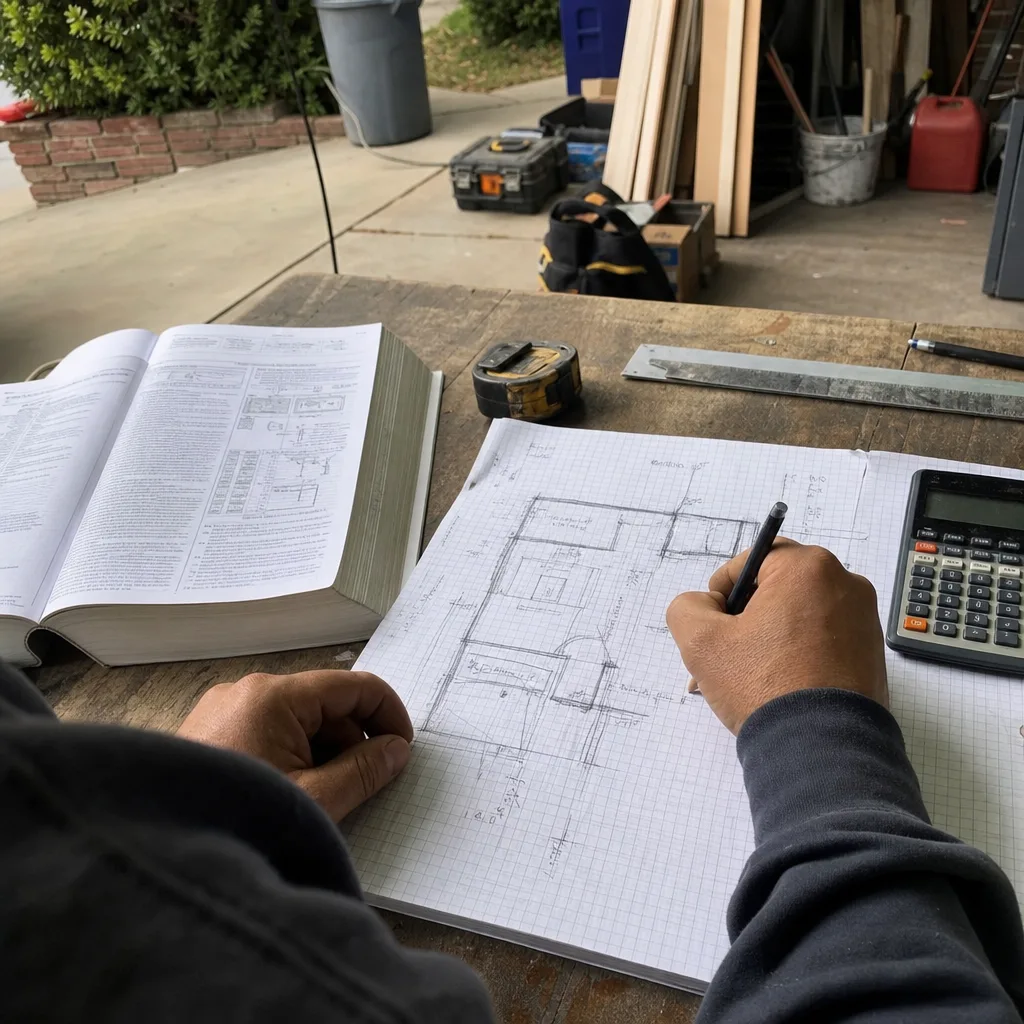
There is no high-tension danger in fiber-cement siding replacement, but there is a permit and code question that trips up most owners. In Chino Hills, any siding replacement exceeding 200 square feet triggers a building department notification, and work on an ADU (which was permitted as a separate dwelling unit) requires an amended scope or a new correction permit if the original installation is being remediated. We handle this documentation as part of our standard process.
What you can safely check yourself: the extent of the damage by gently probing suspect areas with a flathead screwdriver, the fastener pattern on any exposed panel back, and the original permit set in your files. What goes wrong with DIY: improper fastener depth (flush, not countersunk, is the spec), failure to leave the required expansion gap, cutting panels without a fiber-cement blade and dust collection, and using non-approved sealant that voids the James Hardie warranty. We have re-replaced enough owner-attempted repairs in Chino Hills to know the cost of fixing the fix usually exceeds the original quote. Call (951) 456-4467 for a free estimate with written pricing.
FAQs
The product warranty is 30 years; in Chino Hills’ inland climate, we see 25-35 years with proper installation and repainting every 7-10 years. The critical variable is whether the original installer followed James Hardie’s clearance-to-grade specification (minimum 6″ for lap siding, 2″ for panel). Call (951) 456-4467 for an exact quote on your specific condition - estimates are free.
Minor surface cracks can be filled and repainted if the substrate behind is dry. Delamination, wicking damage, or fastener-head blowout requires full panel replacement; patch repairs telegraph through paint within two seasons and trap moisture. We document the distinction with photos during our assessment. Call (951) 456-4467 for an exact quote - estimates are free.
A localized replacement on one wall (100-150 sq ft) takes 2-3 working days including removal, substrate inspection, new panel install, and sealant cure before paint. Full-structure re-siding runs 2-3 weeks. Weather matters: we do not apply sealant below 40°F or in forecast rain, which in Chino Hills is rare but not impossible in January. Call (951) 456-4467 for scheduling - estimates are free.
We stock the 15 most common HardiePlank and HardiePanel formulations and ColorPlus colors in our Chino Hills warehouse. Specialty colors or discontinued formulations require 2-3 week factory order. We verify stock against your sample or code during the estimate visit, not after the contract is signed. Call (951) 456-4467 to confirm availability for your project - estimates are free.
Ellery ADU Studio Chino Hills is an independent design-build studio, not affiliated with James Hardie. We specify, coordinate, and warrant the installation of James Hardie systems under our single-contract model. Nadia Ellery grew up in Santa Monica and spent enough years watching the coast get built out, parcel by parcel, to understand exactly why a property owner wants the numbers on paper before the first shovel moves. She studied construction technology at Santa Monica College, then spent the better part of two decades doing design-build work that slowly shifted toward accessory dwelling units as the demand - and the code - finally caught up with the housing problem. For the past several years she and our crew have worked throughout Chino Hills, including projects on the hillside lots above Carbon Canyon Road where setbacks and slope calculations leave no margin for guessing. She keeps a printed copy of every permit set she has pulled, filed by address, because she thinks a client should be able to call her five years after move-in and get a straight answer in under ten minutes.
Ready to price your James Hardie ADU repair or new build? Call (951) 456-4467 to schedule your free estimate. You’ll receive a written price before any work starts, a documented photo record of our findings, and the full terms of The Haven Standard in hand.
Written by Nadia Ellery, Owner, Ellery ADU Studio Chino Hills at Ellery ADU Studio Chino Hills, serving Chino Hills and nearby areas.