
Cover Site Prep & Utilities: The Chino Hills Owner’s Guide
Cover-compatible site prep and utility connections in Chino Hills typically run $8,500-$14,500 installed, depending on whether your lot needs trenching through the decomposed granite common on hillside properties or a straightforward tie-in to existing sewer and electrical at the main house. We stock the full Cover utility specification package and can coordinate same-day assessment in Chino Hills and the Carbon Canyon corridor. Most owners discover a site prep or utilities issue when Cover’s delivery timeline stalls because the foundation pad doesn’t match their module’s bolt pattern, or when the city of Chino Hills returns plans with a utility location conflict that wasn’t caught in the initial survey.
Which Cover Models This Applies To
Cover’s current product line, the Cover Backyard Studio system, ships with a standardized utility stub specification that doesn’t change between the 420-square-foot and 620-square-foot modules. The critical identifier is the foundation detail sheet in your Cover purchase agreement, specifically the “Site-Built Foundation with Utility Rough-In” page. Look for the stamped drawing number in the lower right corner; anything prefixed “CB-2023” or later uses the current bolt pattern and PVC sleeve layout we keep in stock.
We also see the occasional Cover “Series 1” module in Chino Hills, mostly on properties purchased during the 2021-2022 production window. Those units used a different electrical stub height, 18 inches above finished grade versus the current 24 inches, which creates a conflict with Chino Hills’ local amendment requiring 24-inch minimum clearance for flood-prone areas. The OEM Cover spec is available, but we typically specify an adapted sleeve kit that meets both Cover’s warranty requirements and Chino Hills’ amended code. That’s a detail your generic excavator won’t catch until the inspector fails it.
Ellery ADU Studio Chino Hills is an independent design-build studio; we are not affiliated with Cover. We specify and coordinate Cover systems alongside Abodu and Dvele under our single-contract model.
Signs Your Cover Site Prep & Utilities Is Failing
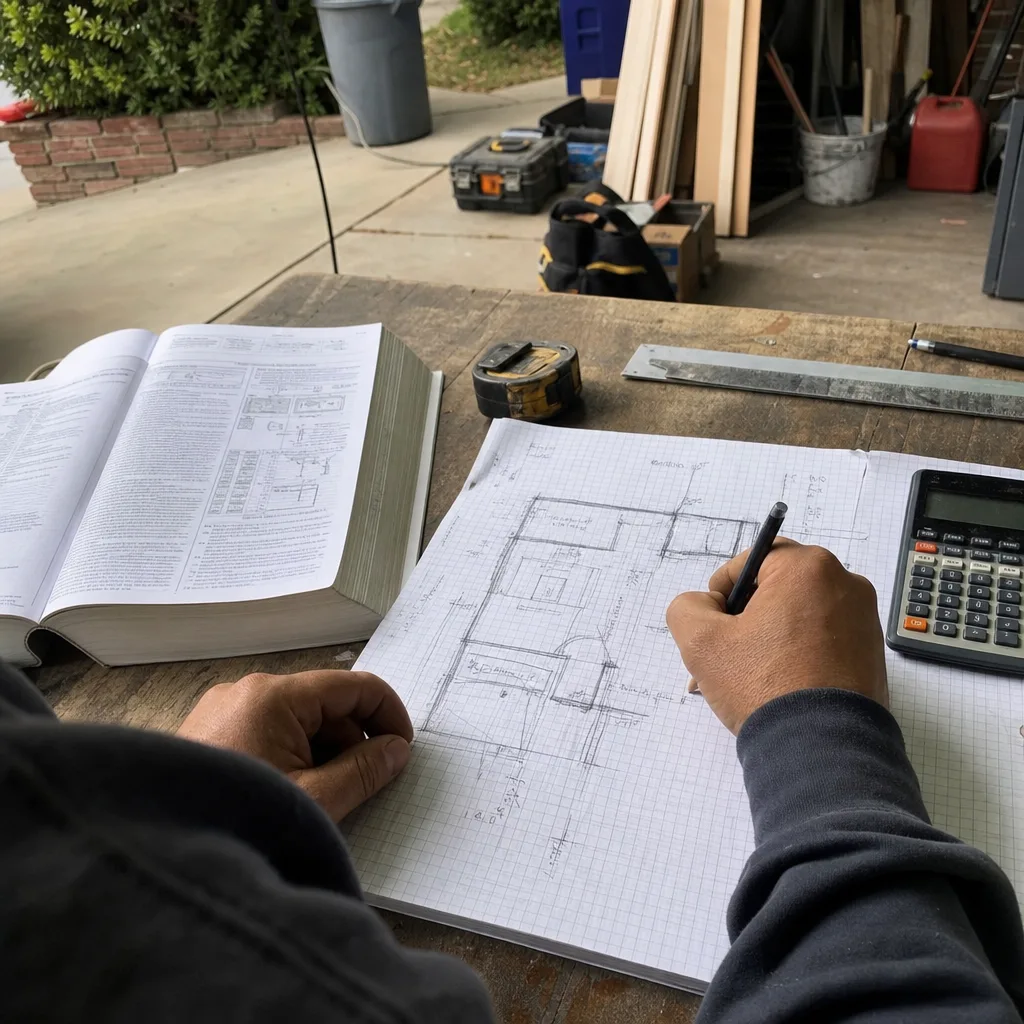
- Foundation pad out of level by more than 1/4 inch. Cover’s steel frame modules tolerate almost no racking; a pad poured by a generalist who didn’t read the “±1/8 inch over 10 feet” spec will stress the module’s corner connections. We find this most often on Chino Hills lots where the contractor used a standard 4-inch residential slab spec instead of Cover’s required 6-inch reinforced pad with 12-inch wide footings.
- Water intrusion at utility penetrations after the first rain. The sleeve sealant detail in Cover’s spec calls for a specific two-part polyurethane, not standard construction caulk. When that seal fails, water follows the electrical conduit into the module floor cavity. On hillside lots above Carbon Canyon Road, we’ve seen this accelerate dramatically because the slope concentrates runoff at the uphill penetration.
- Electrical panel showing ground fault trips after module connection. Cover’s integrated electrical package assumes a single 200-amp main panel feed with a specific grounding electrode configuration. If your Chino Hills home was built in the 1980s with a split-bus panel or an outdated grounding system, the module’s GFI protection will conflict with the house wiring. This isn’t a Cover defect; it’s a site prep mismatch that should have been caught in the load calculation phase.
- Sewer line backing up at the module connection point. The 3-inch gravity sewer lateral from Cover’s bathroom cluster needs 1/4 inch per foot minimum slope. On flatter Chino Hills lots, particularly in the western neighborhoods near Grand Avenue, we’ve seen trenching that met the spec on paper but settled after the first wet season, flattening the run to 1/8 inch or less.
- Gas line pressure test failure at final inspection. Cover’s optional heating package uses a higher-pressure gas feed than standard residential appliances. The flexible connector supplied with the module is rated for that pressure, but if your site prep contractor used a standard 1/2-inch black iron run with residential-rated shutoff valves, the system won’t hold the 2 psi test that Chino Hills Building & Safety requires for modular gas connections.
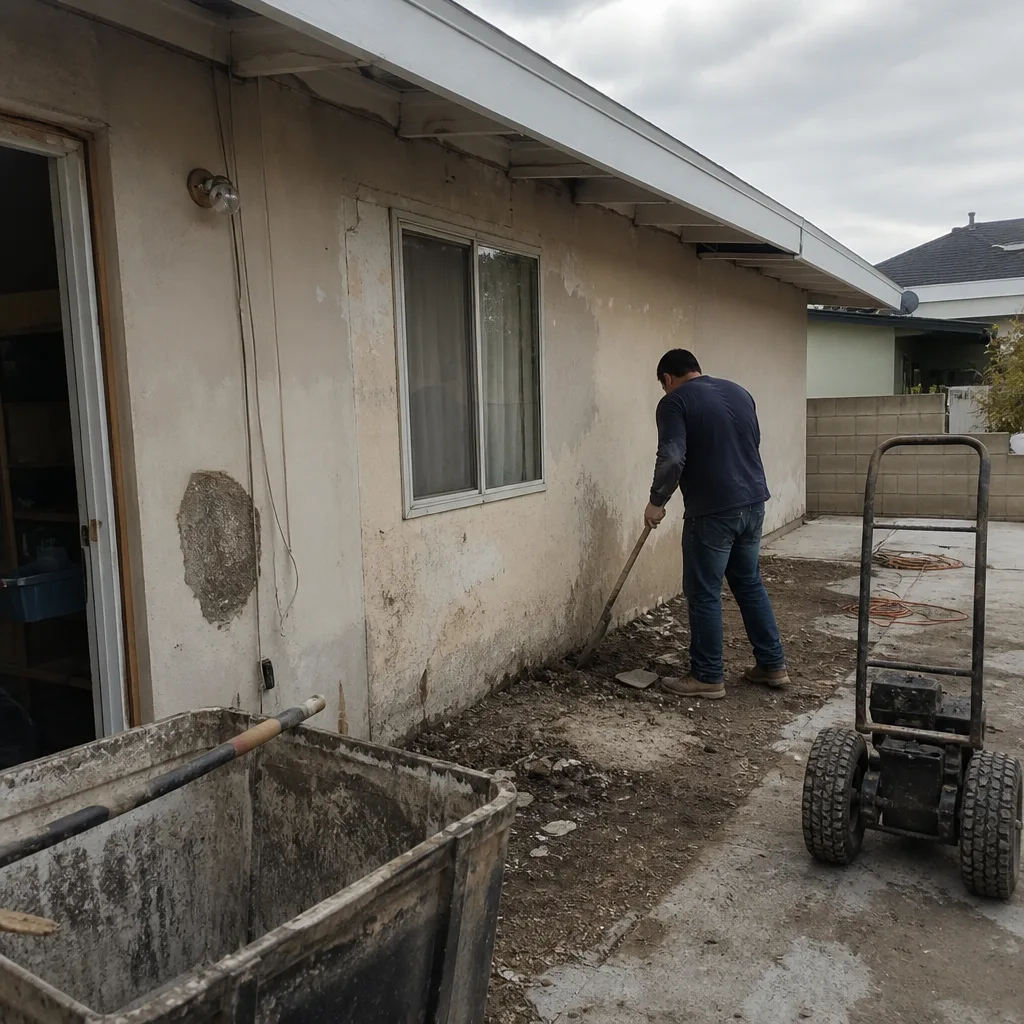 Before
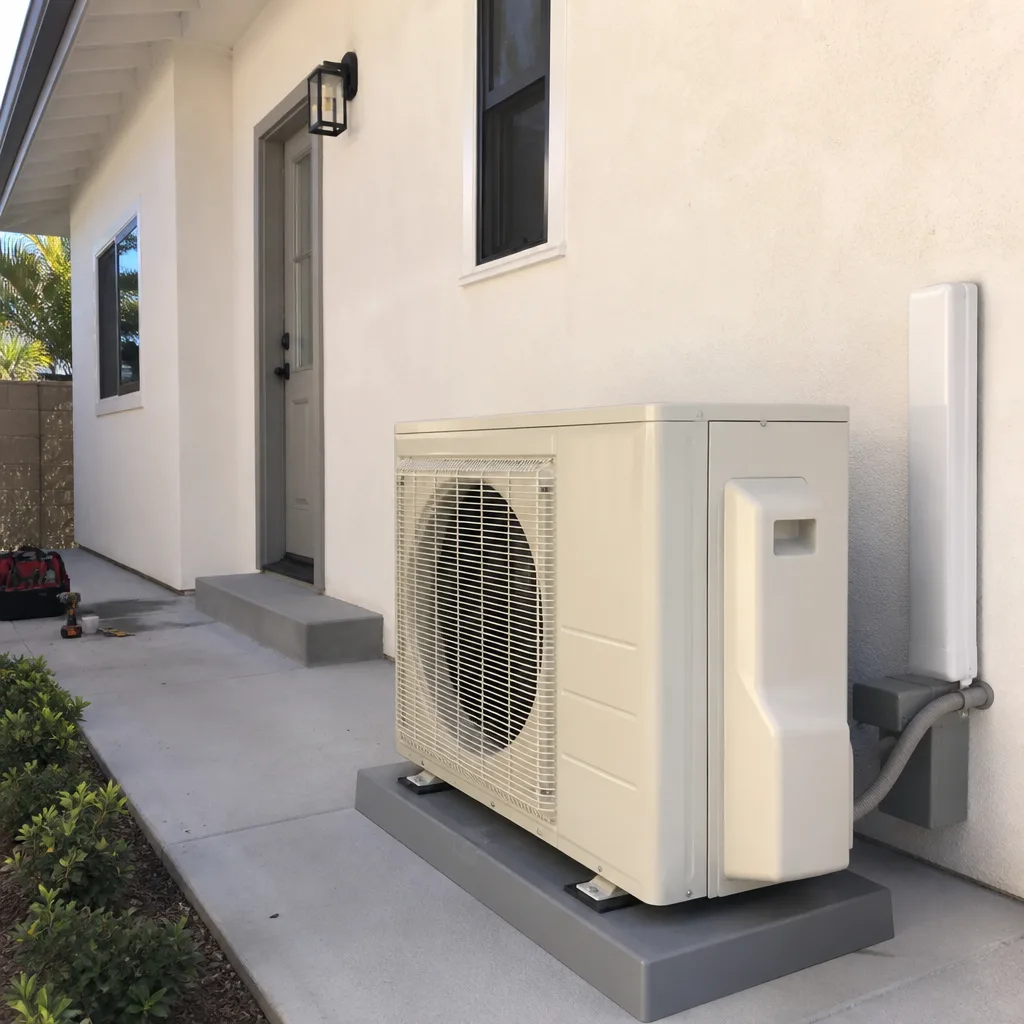 After
AfterReplacement Cost & What’s Included
In Chino Hills, full site prep and utilities correction for a Cover module typically breaks down as follows:
| Scope Item | Typical Range |
|---|---|
| Foundation pad removal and re-pour to Cover spec | $4,200-$6,800 |
| Utility trenching (50-120 linear feet) | $2,800-$4,500 |
| Electrical service upgrade and module connection | $1,800-$3,200 |
| Sewer lateral correction or replacement | $1,200-$2,800 |
| Gas line pressure-rated replacement | $800-$1,400 |
The wide spread on foundation work reflects whether we’re cutting back an existing slab or starting from native soil. On the hillside lots above Carbon Canyon Road, we often hit unexpected bedrock at 18 inches that requires a hammer attachment, which adds roughly $1,200 to the trenching line item. Under Haven Standard Clause 1, your written price includes all of this before we move a tool; if we hit rock, that’s our contingency, not your change order.
Every site prep and utilities project carries our 365-Day Done Right Promise. If the finished pad and utility connections don’t match the permitted drawings, we make it right. The paperwork should explain itself. If it doesn’t, the project isn’t ready.
DIY or Call Us?
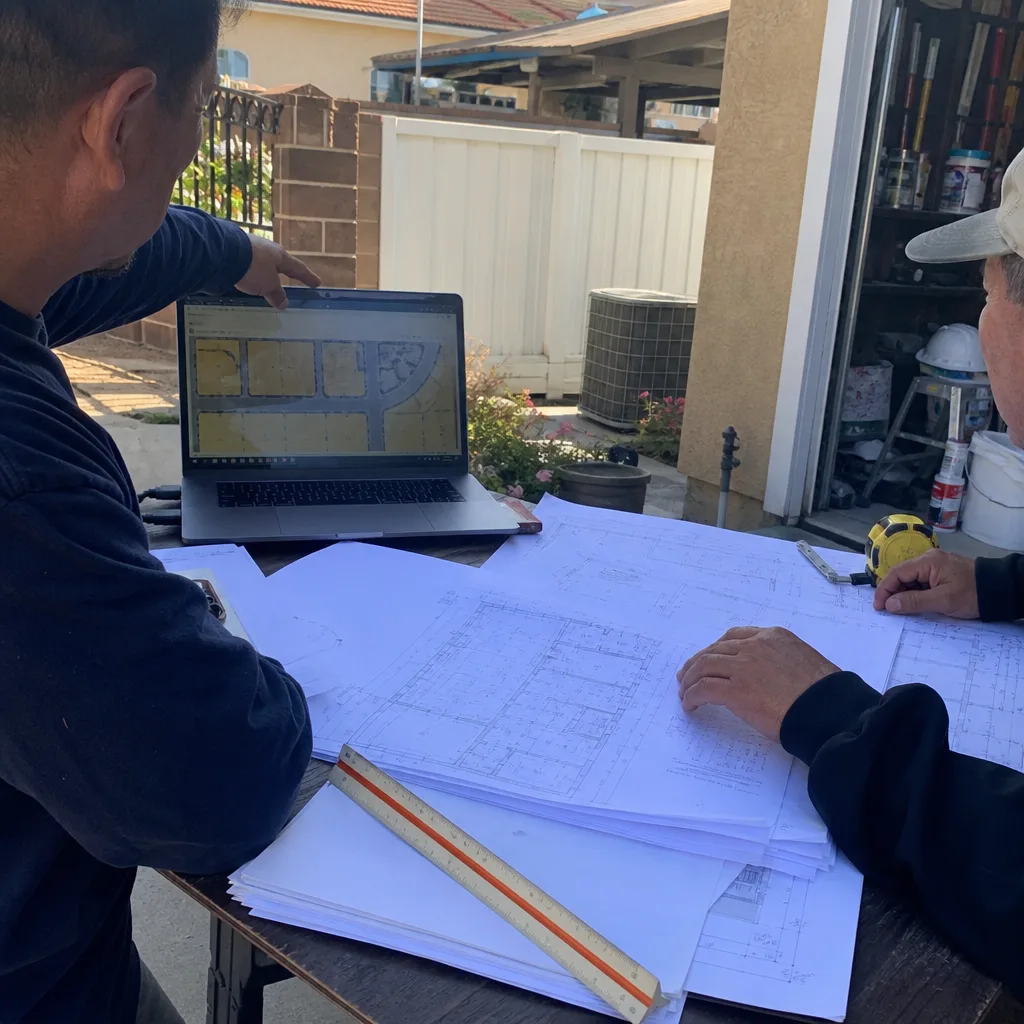
There’s a safe middle ground here. An owner can verify the foundation dimensions against Cover’s drawing, check that utility sleeves are present and capped, and confirm the site drains away from the pad perimeter. What you cannot safely do yourself: pressure-test gas lines, pull an electrical service permit in Chino Hills, or certify a sewer lateral for connection to the municipal system. The gas work in particular carries real hazard; a 2 psi test on a residential line that isn’t properly isolated can damage appliances inside the main house or create a leak that won’t show until the module is occupied.
We also see DIY foundation pours that looked level at noon and were 3/8 inch off by 4 p.m. because the mix was placed too wet in September heat and slumped before initial set. Cover won’t accept delivery on a non-compliant pad, and their rescheduling window is currently 8-12 weeks. Call (951) 456-4467 and we’ll assess what you’ve got against what the spec requires, with a written price to make it right if there’s a gap.
FAQs
A properly executed foundation and utility package should last the full service life of the module itself, 50+ years for the concrete work and 30+ for buried utilities in Chino Hills’ climate. The specific failure point we watch is the PVC sleeve sealant, which degrades faster in the high-UV, low-humidity summers here than in coastal installations; inspect it at year 15 and expect replacement at 20-25 years.
Partial repair is often possible. A foundation pad that’s out of level can sometimes be corrected with a polymer overlay rather than full removal, saving roughly $2,800. Utility lines are more binary; a failed sewer lateral with root intrusion or a gas line that won’t hold pressure needs full replacement to meet Chino Hills inspection standards. Call (951) 456-4467 for an exact quote - estimates are free.
Foundation work: 3-5 days for removal and re-pour, plus 7 days cure time before module delivery. Utility corrections: 2-4 days for trenching and connection, assuming Chino Hills Building & Safety can inspect within their standard 48-hour window. We coordinate inspection scheduling as part of our permit management; it’s included in the single contract, not billed separately.
We maintain the full Cover foundation specification package, including the current bolt template, PVC sleeve kit, and specified sealant, at our Chino Hills staging yard. For electrical and gas components, we pull to spec from verified suppliers rather than stocking every variant; this lets us match your specific main house configuration without carrying inventory that may sit past code cycle changes.
Written by Nadia Ellery, Owner, Ellery ADU Studio Chino Hills at Ellery ADU Studio Chino Hills, serving Chino Hills and nearby areas.